
Grains and Gluten: The Double Illusion
“Agriculture was the worst mistake in the history of the human race. It lowered the quality of nutrition, weakened health, and reduced the stature and robustness of human populations.”
Jared Diamond
🔍 Short on time? Here is the summary of this page:
• Grains weakened human beings from the moment they were introduced: deficiencies, loss of robustness, a decline in bone and immune health.
• They replaced a varied, ancestral diet with a poor monoculture that favours mineral deficits, inflammation and carbohydrate dependence.
• Gluten opens the intestinal barrier in everyone, even without symptoms, triggering inflammation, permeability and silent immune activation.
• Modern wheat is more toxic: more aggressive gluten, fermentable fructans, pro-inflammatory ATIs that activate TLR4.
• Inflammatory signals from the gut reach the brain: mental fog, reduced clarity, cognitive disorders and loss of inner stability.
• Modern grains create cycles of dependence through glucose and dopamine, weakening willpower and discernment.
• The omnipresence of gluten in processed foods sustains background inflammation even in those who believe they “tolerate it”.
• Restoring gut integrity and breaking free from carbohydrate dependence is an act of sovereignty: it means reclaiming an inner terrain that is clear, stable and in command of its own choices.
✨Returning to a grain-free diet means restoring biology and inner sovereignty.
🎧 Audio version of the page
Page audio available only with the Premium membership
Explore the page
The History of Grains: The First Biological Fracture
When humans left nomadic life to settle around agriculture, their diet changed radically. The diversity that had shaped their biology for two million years — animal proteins, natural fats, varied plants, abundant micronutrients — was replaced by an almost exclusive base of wheat, barley, millet, rice or maize. The consequences were written into their bodies straight away.
Bones: An Unflinching Archive
The paleopathology work carried out since the 1980s by Mark Nathan Cohen, George Armelagos and, more recently, Clark Spencer Larsen all points the same way: as soon as grains were adopted, human stature shrank, bone robustness weakened and signs of deficiency multiplied. Agriculture did not strengthen bodies; it made them more vulnerable.
The Mouth: The First Area to Show Decline
Teeth tell the same story. Among hunter-gatherers, cavities were rare. With the arrival of grains they became frequent, sometimes multiple, along with early tooth loss and enamel hypoplasia, which point to stress or malnutrition during childhood. Starch alters the oral flora and creates an acidifying environment. The mouth thus becomes the first biological marker of decline.
The Invisible Weight of Anti-Nutrients
Grains are rich in phytates, lectins and tannins, molecules that block the absorption of iron, zinc, magnesium and calcium. Neolithic skeletons confirm exactly these effects: iron-deficiency anaemia, widespread mineral deficiencies and increased bone fragility. Whole wheat, today presented as protective, contributed to these structural deficiencies for millennia.
A Weakened Immune System
Farming populations show more infectious lesions, more prolonged inflammation and more osteomyelitis. The combination of an impoverished diet, a sedentary lifestyle and high population density placed the immune system under constant pressure, something hunter-gatherers never experienced.
Women and Children: The First Victims of Agriculture
Bioarchaeological studies reveal a rise in infant mortality, more nutritional stress in children and severe deficiencies in women. Maternal bone fragility raised the risks tied to pregnancy and childbirth. Grain farming did not usher in a golden age: it introduced deep vulnerability into human populations across generations.

The Gradual Loss of Metabolic Flexibility
Hunter-gatherers naturally alternated between glucose-rich periods and periods of fat-burning, regularly reaching physiological ketosis. Grains imposed a state of near-constant carbohydrate metabolism, reducing metabolic flexibility and preparing, over millennia, the fragile terrain onto which modern sugars, industrial oils and ultra-processed food would later be grafted.
An Economic Compromise, Not a Biological Foundation
The archives of archaeology and osteology are unequivocal: grains were never the natural fuel of the human species. They made it possible to increase population density, but at the cost of poorer health, greater physical fragility and more widespread deficiencies. Our modern vulnerability does not begin with industrial sugar; it begins the moment humanity replaced biological diversity with grain monoculture.
The Asian Paradox
But one objection often comes up: why don’t Asians, who eat rice every day, develop the metabolic diseases seen in the West?
If you too have wondered how a population that eats rice every day can stay lean and escape the metabolic diseases ravaging the West, discover below what modern science has brought to light.
The Modern Role of Grains: Filler, Dependence and Inner Collapse
In modern eating, wheat, maize and rice are not present because they feed human beings efficiently, but because they feed industry efficiently. They are cheap to produce, easy to store, endlessly processable, and they add bulk to any product without raising costs. Their primary function is not nutritional: it is economic. They are bulking agents used to replace nutrients that are more expensive to provide — animal proteins, quality fats, vitamins, minerals.
That is why grain derivatives are found in almost everything processed: sauces, biscuits, ready meals, plant-based products, desserts, soups, snacks, meal replacements and even in foods supposedly labelled “healthy”. This omnipresence does not answer the biological needs of the human being, but the volume and profitability imperatives of the food industry. By consuming grains, you are not nourishing your body: you are taking part in an economic model built on filler.

Fast Starch and Dependence: When the Brain Seeks Refuge
If grains take up so much space in our lives, it is not only because they are profitable: it is also because they activate well-documented addictive mechanisms. Starch, when rapidly digested, causes a sudden rise in glucose and a dopamine release. This rise in dopamine creates immediate relief, a sense of calm that the brain records as a quick solution to stress.
This reflex goes back a long way. Since the dawn of time, human beings have lived with fear, insecurity and uncertainty. The nervous system has learned to hold on to anything that can briefly ease an inner tension. Starch exploits this ancestral mechanism. The brain notes: “this relieved me, I can come back to it.” And it comes back.
On this level, there is no fundamental difference between starch, alcohol, cigarettes or certain fast-acting drugs. Society sets these products apart, but the nervous system draws no distinction whatsoever: it records only a reward signal. The mistake comes from the fact that starch is seen as normal, cultural, traditional, familial. Yet the neurological circuits it activates are the same as those involved in other recognised forms of addiction.
When Dependence No Longer Touches Only the Body, but the Will
The glucose–dopamine cycle does not only exhaust the metabolism: it weakens the will. When the inner chemistry swings constantly between a rapid rise and a sharp fall, clarity and discernment shrink. Decision-making becomes harder, emotional stability declines and the need for immediate comfort grows stronger. This phenomenon has nothing to do with a lack of discipline or a personal flaw: it is a direct consequence of biology.
This overall fragility — physical, emotional and behavioural — often pushes people to downplay the importance of this mechanism, or to find justifications (“it’s not that serious”, “I need it to keep going”, “everyone eats it”). This reflex is not a conscious lie: it is the effect of a subtle dependence that operates unnoticed because it uses foods perceived as harmless.
Understanding this is in no way about blame. On the contrary, it is a liberation. It lets you see that the problem does not come from a personal weakness, but from an encounter between a brain built to survive and foods built to stimulate reward. You can only reclaim your sovereignty by understanding what is really at play.
But starch is only part of the problem. Another element, closely tied to grains, plays a decisive role in the decline of modern health: gluten. The gluten found in ancient grains already posed biological challenges, but modern wheat, far richer in toxic fractions, amplifies its effects and makes them impossible to ignore today. Contemporary research, notably that of Dr Alessio Fasano on intestinal permeability and Dr David Perlmutter on neurological inflammation, shows that gluten reaches well beyond the digestive sphere: it influences immunity, the gut, the brain, cognition and even emotional stability.
The View of Chinese Medicine (3,000 Years Ahead)
The founding texts of Chinese medicine, the Huangdi Neijing (Suwen), written more than 3,000 years ago, already describe the harmful effects of grains on the body. Long before the modern discovery of gluten, these writings explained that grains, when consumed too frequently or when digestion is already weakened, create Dampness, Stagnation and Phlegm in the body. These imbalances weaken the Spleen–Stomach, the centre of food transformation, and lead to fatigue, heaviness, slow digestion and mental fog.
The traditional description matches strikingly well what contemporary science observes today: inflammation, microbiome disruption, intestinal permeability and gluten-related cognitive disorders. For Chinese medicine, these phenomena are nothing new: they are the natural consequence of heavy foods that are hard to transform. In other words, what modern biology is bringing to light was already understood energetically three millennia ago.
Gluten: Intestinal Rupture, Mental Confusion, Loss of Mastery
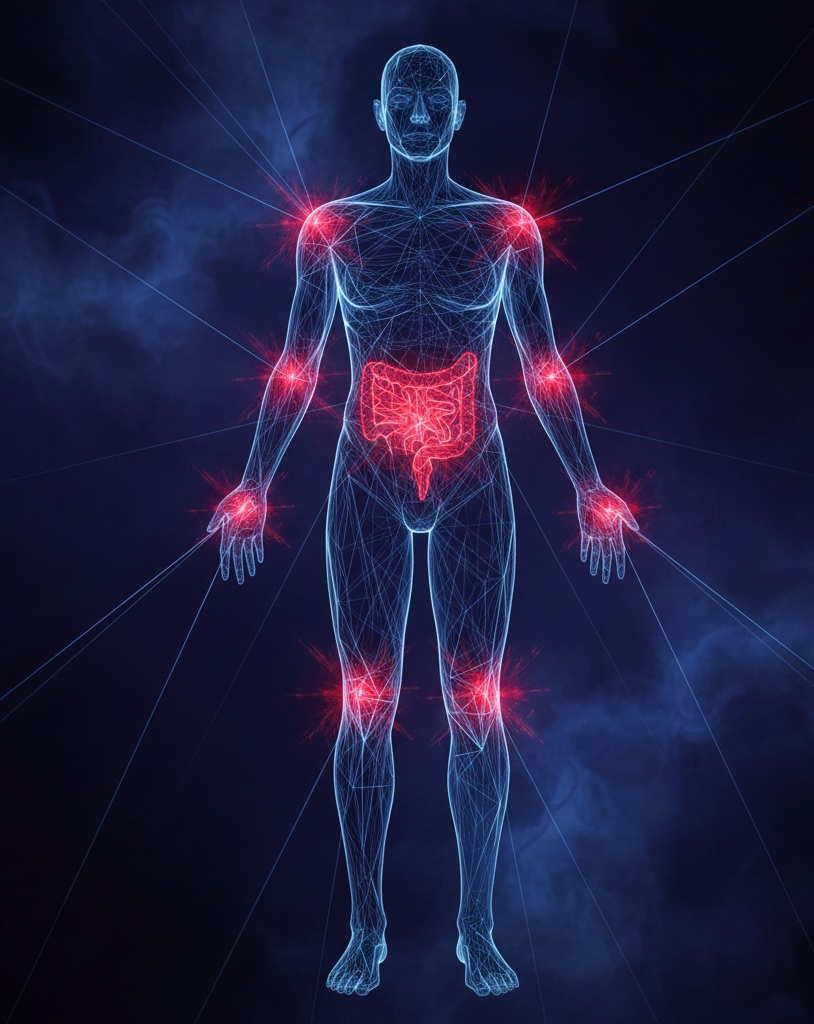
There is a dangerous idea, widespread even in doctors’ offices: “Gluten is just a fad”, “If you’re not coeliac, there’s no problem”, “You’re not sensitive, so you can eat it.” These claims are false. The work of Dr Alessio Fasano, a pioneer of research on intestinal permeability, shows that gliadin triggers the release of zonulin and an increase in intestinal permeability in every individual tested, with an intensity and duration that vary according to immune status and genetic predisposition. Someone who believes they are “not sensitive” still suffers, unknowingly, a breach of the intestinal barrier, immune activation and low-grade inflammation. When this permeability sets in over time, meal after meal, it prepares the ground for autoimmune diseases, inflammatory disorders and digestive imbalances, even in the absence of immediate symptoms. This is neither a fad nor a belief: it is an established and documented biological mechanism.
The Mechanism: How Gluten Opens the Intestinal Barrier
The mechanism is now well understood. Gluten contains a fraction called gliadin. When it comes into contact with the intestinal wall, it triggers the release of a regulatory protein: zonulin. This zonulin opens the tight junctions that normally keep the gut sealed. In a healthy person, these junctions open and then close again quickly. But under the repeated effect of gluten, this mechanism runs out of control: the junctions loosen too often, for too long, and the gut stops being a barrier. Food fragments, toxins or microbial components then cross the mucosa and set off an inappropriate immune response. This process has been observed both in coeliac people and in subjects considered healthy and not sensitive to gluten. The increase in permeability induced by gliadin depends neither on a diagnosis of coeliac disease nor on a declared sensitivity. Biologically, everyone reacts, even if the intensity of the manifestations varies. This repeated loosening of the intestinal barrier is the entry point for many inflammatory and autoimmune conditions, because the immune system is forced to respond to elements that should never have crossed the mucosa.

The Consequences: Inflammation, Autoimmunity and Systemic Dysregulation
When the intestinal barrier stops being sealed, the immune system finds itself exposed to elements that should never have crossed the mucosa. This constant intrusion sustains a low-grade inflammation that becomes, over time, fertile ground for many disorders. The body must continually handle a flood of abnormal signals, which exhausts its regulatory capacities. It is in this context that the first stages of autoimmunity take hold: the immune system, overwhelmed and disoriented, may eventually target tissues whose molecular structures resemble those of the foreign elements it has encountered. Digestive imbalances also intensify, permeability favouring dysbiosis, bloating, hypersensitivity and a general weakening of the digestive tract. This systemic inflammation, even when silent, also disrupts hormonal and nervous exchanges, creating fertile ground for metabolic disorders, emotional dysregulation and a gradual decline in vitality.
The Gut–Brain Axis: When Digestive Inflammation Clouds the Mind
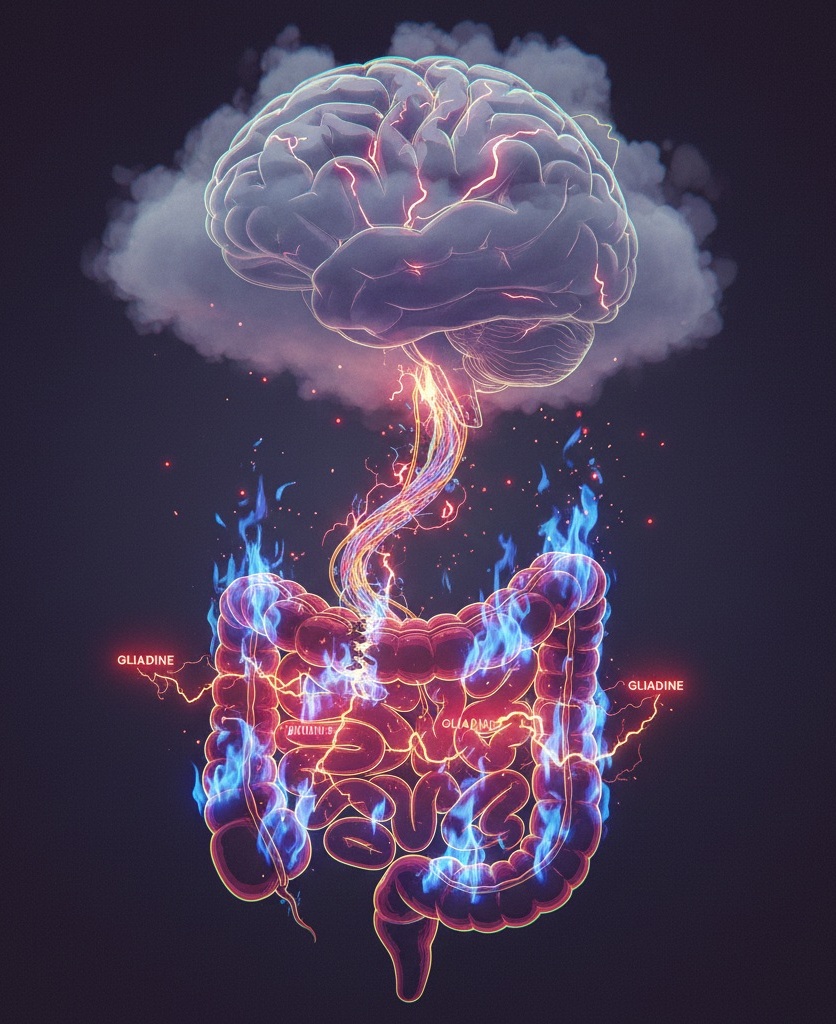
The gut is not a mere digestive organ; it is a neuro-immune centre intimately connected to the brain. When the intestinal barrier is compromised, the inflammation that follows never stays local. It circulates, reaches the nervous system, alters brain chemistry and disrupts the communication between the gut and the brain. This widely documented phenomenon explains why an intestinal imbalance can show up as mental fog, reduced clarity, difficulty concentrating or emotional instability. Inflammation from permeability also promotes the production of cytokines that disturb the neurotransmitters essential to mood and motivation. Little by little, the person loses their mental sharpness, their capacity to make clear decisions and their discernment. This clouding is not psychological in origin; it is biological, and gluten is one of its least recognised triggers.

Weakened Sovereignty: When the Body No Longer Offers Inner Stability
When the gut is weakened and the brain receives blurred signals, the person gradually loses their inner stability. Clarity, drive, the capacity to decide and to stay aligned never rest on willpower alone: they depend on a biological terrain able to support lucidity. Yet a body constantly stimulated by inflammation, intestinal permeability and the gluten-related neurochemical disturbances can no longer maintain this state of inner coherence. Decision-making becomes more hesitant, mood fluctuates, motivation fades, and disproportionate reactions can appear. This is not a personal failure, but a direct consequence of biological dysregulation. When the body falls into disorder, sovereignty crumbles: the human being no longer has the same command over their perceptions, their clarity or their actions. Taking back control therefore begins by restoring a body able to support consciousness.
Modern Gluten: A Transformed Protein That Has Become More Aggressive
Today’s gluten has little in common with the one the first farmers ate. Successive varietal selections have profoundly changed the structure of wheat, sharply increasing the proportion of gliadins, the most inflammatory fractions. This reinforcement of gluten was never designed for human health; it answered agricultural and industrial imperatives: to produce more, resist disease and improve bread-making. As wheat became richer in gluten, the biological impact intensified. Guts already weakened by the modern diet tolerate these altered proteins even less, and immune responses become more frequent and more marked. This transformation also shortened the fermentation time of bread, depriving the body of the natural breakdown of problematic peptides by lactic bacteria. The body is thus exposed to a more aggressive protein load than any encountered over the course of history. Gluten is therefore not only an ancestral problem: in its current form, it has become a major factor in inflammation, intestinal permeability and neuro-immune disturbances.
Neurological Damage: From Mental Fog to Structural Changes in the Brain
The effects of gluten do not stop at the gut. Once the digestive barrier is weakened, inflammatory signals quickly reach the central nervous system. This low-grade inflammation alters the function of neurotransmitters, disrupts neuronal communication and impairs the brain’s energy metabolism. This is why a simple intestinal imbalance can show up as persistent mental fog, memory loss, cognitive fatigue or difficulty holding a clear and stable thought. The work of Dr David Perlmutter has brought to light a deeper dimension: gluten-induced inflammation can promote the formation of amyloid plaques, those protein deposits associated with cognitive decline. Even in people without digestive symptoms, repeated exposure to gluten is enough to activate inflammatory processes capable of changing the structure of the brain. Gluten is therefore not only a gut disruptor; it becomes a neuro-inflammatory factor that gradually erodes cognition, emotional stability and the capacity to hold a coherent inner direction.

An Omnipresent Trap: Hidden Gluten and Sustained Dependence
Gluten now occupies a far more invasive place than it once did. It is no longer found only in bread, pasta or pastries, but in a large share of processed products: sauces, cured meats, soups, ready meals, coatings, binders, thickeners or texturing agents. This omnipresence makes daily exposure almost unavoidable for those who do not watch what they eat. Even when symptoms are faint or absent, this repetition sustains intestinal permeability and feeds a permanent inflammatory state. Gluten also stimulates pathways of comfort and dependence, in particular through the release of exorphins, peptides that interact with certain receptors of the nervous system. These effects help to consolidate a cycle in which the body craves what weakens it, while inflammation gradually settles in the background. In this context, it becomes hard to tell what belongs to our choices and what belongs to a conditioned biological response.
The Absence of Symptoms: An Illusion of Tolerance
Gluten creates a dangerous paradox: most of the people affected feel nothing. This absence of immediate signs is often read as proof of tolerance, when in reality it masks a silent biological mechanism. The intestinal permeability induced by gliadin does not always cause pain, bloating or discomfort. It can stay completely invisible for years, all the while activating immunity and sustaining a discreet but constant inflammation. This gap between what is felt and the biological reality leads many people to believe they “digest gluten well”. Yet studies show that even without symptoms, the tight junctions open, inflammation circulates and the first disturbances take hold. For many, the manifestations appear only late, in the form of exhaustion, neurocognitive disorders, irritable bowel or autoimmune diseases. Gluten thus acts in the shadows: the silence of symptoms is not a sign of compatibility, but often the first stage of an inflammatory process that advances quietly.
Gluten and Autoimmunity: An Underestimated Biological Trigger
The rupture of the intestinal barrier induced by gluten creates the ideal conditions for the emergence of autoimmune diseases. When food fragments and microbial components cross the gut, the immune system is forced to react continuously, until it loses its capacity to tell self from non-self. This phenomenon is one of the central elements described in the model of autoimmunity: the combination of intestinal permeability, chronic immune activation and genetic predisposition. Gluten fits precisely into this pattern. It sustains an inflammatory state which, over time, increases the likelihood that the immune system will attack tissues of the body whose molecular structure resembles the peptides it meets in the gut. This immune confusion can affect the thyroid, the joints, the skin, the nerves or the gut itself. Most troubling of all, this process often sets in well before the first symptoms appear. Gluten is therefore not only a digestive irritant: it takes part in the silent build-up of an autoimmune terrain which, once activated, becomes hard to reverse without a deep change in diet.
ATIs: Gluten’s Hidden Ally That Sets Off Inflammation
ATIs (amylase-trypsin inhibitors) are one of the least known — and most dangerous — aspects of modern wheat. They are not gluten, but they work hand in hand with it to weaken the gut and switch on inflammation. In the grain, their role is clear: to protect the plant by neutralising the digestive enzymes of insects. In humans, this means that they resist digestion and become genuine biological irritants.
ATIs are now classified as anti-nutrients, because they hinder digestion and trigger disproportionate immune responses. Their impact reaches well beyond gluten sensitivity. Studies show that they are able to activate the immune receptor TLR4, a sentinel normally reserved for signals of serious infection. When a food activates TLR4, the body reacts as if facing a major attack: cytokine production, systemic inflammation and dysregulation of innate immunity. This mechanism also affects people who are not coeliac and those who believe they are “not sensitive”.
Modern wheat reinforces this phenomenon further. Current varieties contain larger amounts of ATIs with greater biological activity than ancient wheat varieties. Their action adds to the other aggravating factors: gliadin, which opens the intestinal barrier, and fructans, which feed dysbiosis. The result is a formidable inflammatory trio: a weakened gut, an immune system wrongly stimulated and a disturbed flora. The effects of contemporary wheat therefore do not come from a single component, but from a convergence of molecules capable of disrupting digestion, immunity and inner stability all at once.
Conclusion: Reclaiming a Clear Terrain to Take Back Mastery
Gluten is not a mere food component. It is a major biological factor that weakens the intestinal barrier, sustains inflammation, disrupts the nervous system and gradually erodes inner clarity. Its effects do not depend on the presence of symptoms: they set in even in those who believe they tolerate it. In an environment where gluten has become omnipresent and often hidden, the body is continuously exposed to a substance that weakens its most essential foundations: the integrity of the gut, cognitive stability and the capacity for discernment. Understanding this makes it possible to step out of complacency and take back an active stance. Restoring the gut, reducing exposure and breaking the inflammatory cycles opens the way to a biological terrain able to support lucidity, willpower and personal sovereignty. Mastery of oneself begins with mastery of what passes through us.
Now that we have shed light on the role of grains, it is time to explore the foods that best support strength, immunity and metabolic balance. The path continues here:
Do you want to go further and gain access to the full analyses, the audio versions and the exclusive content? Join the Premium area.
Last updated: 26 February 2026