
Fats: Rehabilitating a Vital Fuel
“Whoever demonizes fat forgets that it is the very breath of longevity.”
🔍 Don’t have time to read everything? Here’s the summary of this page:
• Fat is a vital fuel: it represents the memory of light, stability, and the continuity of life.
• Humans, like all living beings, are designed to run on fats, not sugar. This lipid metabolism is stable, clean, and sovereign.
• It is not natural fat that makes us sick, but its industrial transformation: refining, oxidation, hydrogenation, and mixing with sugar.
• Saturated fats (ghee, tallow, lard, goose or duck fat, coconut oil, animal fats) are stable, nourishing, and protective: they support hormones, the brain, immunity, and longevity.
• Monounsaturated fats (olive oil, avocado, macadamia) provide flexibility and balance; they promote a healthy heart and flexible cell membranes.
• Polyunsaturated fats must be balanced: omega-3s soothe and regenerate, while excess omega-6s inflame and deplete. The ideal ratio is around 1:1, compared to 20:1 in the modern diet.
• MCTs, found mainly in coconut and MCT oil, and to a lesser extent in some full-fat dairy products, nourish the brain and support ketogenesis, a source of pure, stable energy.
• Cholesterol is not an enemy: it is a reparative, protective agent essential for hormone production and neuronal health.
• What makes fat toxic is oxidation, overheating, rancidity, and mixing with carbohydrates. Pure, living fat causes no inflammation.
• Rehabilitating fat means restoring the body’s wisdom: breaking free from the dogma of “fat is bad,” rediscovering inner fire, emotional stability, and mental clarity.
✨ Living on a stable fire is living in peace: fat nourishes longevity, consciousness, and inner sovereignty.
🎧 Audio version of the page
Explore the page
The Wisdom of the Inner Fire
Humanity has been led to believe that fat is the enemy. It has been blamed for every ill: clogged arteries, excess weight, heart disease, as if life itself had come to fear its own energy reserve. Yet every living being that intends to endure stores fat: animals before winter, plants in their seeds, and humans in their cells. This is a universal law: fat is stored light, a principle of stability and continuity.
Our body, when left to its natural intelligence, draws first from this noble source. Fat causes neither energy crashes nor frantic hunger: it nourishes slowly, deeply, with constancy. It does not trigger the hormonal roller coaster that sugars impose. It soothes, it grounds. It is the language of longevity, the fire that burns without consuming.
Fat is not the problem; forgetting its role is. We have transformed it, refined it, oxidized it, heated it beyond its limits, mixed it with sugars that made it explosive. Then we judged it based on this almost absurd caricature. In reality, natural fat, the kind nature intended for us, is a pillar of life: it forms our cell membranes, protects our brain, stabilizes our hormones, supports our immunity, and carries the light of fat-soluble vitamins.
The human body is designed to run on it. Its original metabolism is lipid-based: the most stable, cleanest, most biologically appropriate energy comes from fats, not sugars. It is this silent fire that allows us to think clearly, to stay focused over time, to maintain emotional and energetic balance.
We need to understand that what we call “storage” is not necessarily excess, but a reserve of life. Storing does not mean accumulating to the point of burden, but knowing how to balance, preserve, and release at the right moment. What we call “fat” is not a fault, but a sign of continuity. The intelligent organism stores to survive, to move through cycles, to respond to nature with flexibility, but it does so in harmony, not excess.
Those who learn to listen to this language rediscover a deep connection with the inner light. In fat, the body keeps the memory of the sun, of the seasons, and of time. It is not the enemy of movement: it is its wisest fuel.
Understanding the Different Types of Fat and Their Roles
Not all fats are alike. Their structure, stability, and function define their impact on the body. Some nourish; others inflame. Some protect membranes; others destroy them. Learning to tell them apart means learning to recognize the energetic language of living matter.
Saturated Fats
Saturated fats are the most stable and the most ancient from a biological standpoint. Found in butter, ghee, tallow, lard, duck fat, goose fat, coconut oil, and animal fats, they are solid at room temperature, a sign of their natural stability. These fats resist oxidation and heat. They help maintain the structural integrity of cell membranes, support hormone production, protect the nervous system, and strengthen immunity.
Contrary to established dogma, these fats are not the enemies of the heart: they are the foundation of our cellular architecture, the pillar of our inner fire.
Monounsaturated Fats
Monounsaturated fats, for their part, provide fluidity and flexibility. They are found primarily in virgin olive oil, avocado oil, whole olives, and macadamia nuts. They balance the rigidity of saturated fats, soften membranes, and support cardiovascular health.
They are like a gentle breath within the fire: they allow the body to remain flexible, alive, and adaptive.
Polyunsaturated Fats
Polyunsaturated fats include omega-3 and omega-6, two opposing yet complementary families. Their balance is essential.
Omega-3s, found in fatty fish (sardines, mackerel, herring, anchovies, wild salmon), krill oil, and in the eggs and fats of animals, poultry or ruminants, raised outdoors and naturally fed without grains (grass, insects, wild plants), have a profoundly anti-inflammatory effect. They nourish the brain, nervous system, and heart, while supporting cellular regeneration.
It is the animal’s diet that determines the quality of its lipid profile: food rich in grass and insects restores a physiological balance between omega-6 and omega-3, whereas a grain-based diet destroys it.
By contrast, omega-6s found in many industrial vegetable oils (sunflower, corn, soybean, heated canola, grapeseed) stimulate inflammatory pathways when they predominate.
In the modern diet, the ratio of omega-6 to omega-3 often reaches 20 to 1, when it should be around 1 to 1. This imbalance is one of the major causes of chronic inflammation, fatigue, and premature aging.
Medium-Chain Triglycerides (MCTs)
Finally, medium-chain triglycerides (MCTs) form a special category of saturated fats. Naturally present in coconut, coconut oil, milk, and to a lesser extent in certain animal fats, MCTs are metabolized directly by the liver to produce ketones, a clean, stable fuel for the brain and cells.
Unlike other fats, they require neither insulin nor complex digestion. They promote mental clarity, endurance, and the stable energy characteristic of the ketogenic state.
Together, these four families form the energetic language of life: stability, flexibility, regulation, and pure fire. Understanding their role means understanding how the body orchestrates light into energy, and how modern humans, by breaking this balance, have severed their connection to longevity.
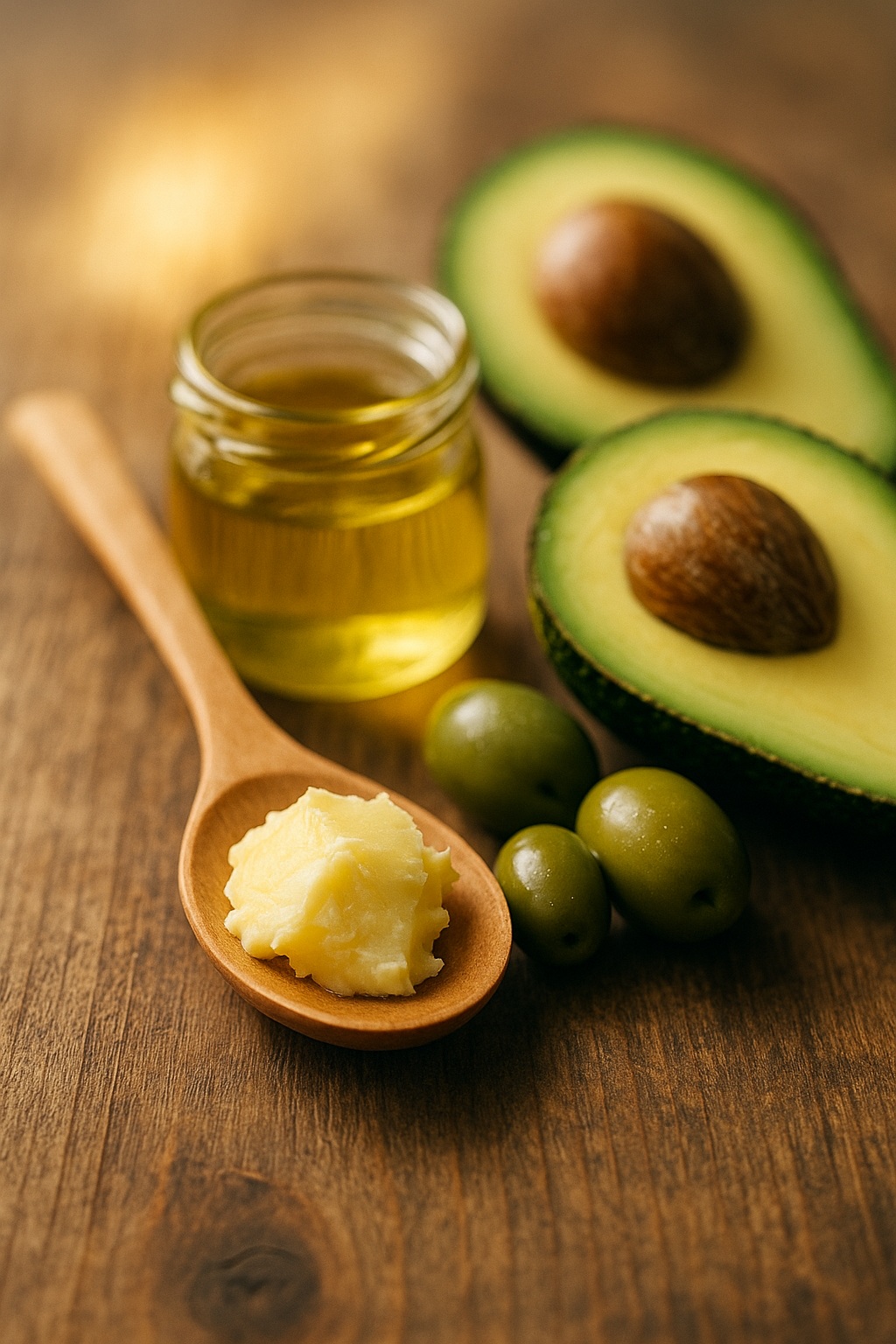
The Vital Role of Fats in the Body
Fats are not merely fuel: they are architecture, intelligence, and a vital breath. They weave the fabric of life down to the smallest cell. Every membrane, every hormone, every nerve impulse depends on their presence and quality. Without fats, biology collapses, thoughts become clouded, and the inner light goes out.
Fats are the most stable and noble source of energy for the human body. Unlike carbohydrates, which burn quickly and cause sharp fluctuations in blood sugar, fats release their energy slowly and without sudden swings. They nourish cells without constantly driving insulin secretion, without burdening the liver, without creating dependency. This is clean, lasting, sovereign energy, the kind the body has recognized as its own since the beginning.
They also form the basic material of our cell membranes. Every cell in our body is surrounded by a lipid membrane whose quality determines overall health: a supple membrane allows fluid communication, a harmonious exchange between inside and outside. It is a living frontier, not a barrier. When these membranes are nourished with natural, stable fats, the body becomes receptive, balanced, resilient.
Fats are also at the root of our hormonal system. Without them, no hormone can be synthesized correctly. Cholesterol, often unjustly demonized, is in fact the precursor to all our steroid hormones: estrogens, testosterone, cortisol, DHEA… When you deprive the body of fats, you gradually silence the hormonal dialogue, disrupt the female cycle, exhaust the adrenal glands, and weaken sexual vitality and mental clarity.
Fat is therefore not an obstacle to life: it is life’s most intimate language.
The brain, too, is a lipid organ: more than 60% of its mass is composed of fats, a large portion of which is cholesterol. This is what gives it its plasticity, memory, and emotional stability. Fats nourish myelin, the sheath that protects neurons and enables fluidity of thought. When the diet is poor in fats, neural signaling becomes impaired, concentration crumbles, and sadness sets in. A brain well nourished with natural fats is a luminous brain, capable of sustained attention, intuition, and inner peace.
Fats also support the immune system. They modulate inflammation, repair tissues, and transport the fat-soluble vitamins, A, D, E, and K, essential for vision, immunity, coagulation, and cellular regeneration. These vitamins cannot exist without fats: they travel together, like light and heat in a single flame.
Finally, fats play an essential role in emotional stability and inner peace. A diet rich in good fats calms the nervous system, promotes the production of neurotransmitters that support emotional balance, and stabilizes mood. This is why low-fat diets often lead to irritability, anxiety, and depression: the brain, deprived of its noble fuel, exhausts itself trying to run on a fire that burns too hot.
Fats are therefore far more than an energy resource: they are a link between matter and consciousness. They embody a healthier, more measured rhythm, inner security, mental clarity, and longevity. They are the breath that connects body to spirit, the flame that allows light to remain within matter.

Why Fat Was Demonized
The history of modern nutrition rests on a corruption dressed up as scientific truth. Since the mid-20th century, a silent war has pitted sugar against fat. And fat is the one sacrificed. People are led to believe it kills, clogs arteries, causes heart attacks, and is the source of “bad” cholesterol. In reality, this is a complete inversion of cause and effect.
Human beings are not made sick by their natural fats. They become sick when they replace them with refined oils, hydrogenated margarines, and oxidized fats, the products of an industry more concerned with profits than with health.
The major anti-fat campaigns are still supported today by the agri-food and pharmaceutical lobbies, heirs to a system initiated as early as the 1960s by the sugar industry.
Back then, biased studies were already funding the vilification of saturated fats to deflect responsibility for metabolic diseases. This scandal, launched at Harvard in the 1960s-1970s, was never truly corrected: it simply changed its face.
This historical manipulation is developed in detail on the page “The Derailment of Dietary Guidelines”.
It is not fat that makes humanity sick, but the way it has been adulterated. We replace living, stable, nourishing fat with fragile vegetable oils that are heated, denatured, oxidized, and then stored for months before being consumed. Through repeated industrial transformations, these oils lose their essence. They cease to be food and become a slow poison, generating inflammation and cellular degeneration.
The fear of cholesterol, meanwhile, has become deeply embedded in the collective consciousness. We divide what should not be divided: “good” and “bad” cholesterol, as if molecules had a moral dimension. Yet cholesterol is not a danger; it is a repair agent, a protector, a vital substance.
When tissues are damaged, the body sends cholesterol to repair them. We then find it in inflamed areas, particularly in atherosclerotic plaques, not because it causes them, but because it is trying to heal them.
What is left unsaid is that these plaques also contain caramelized sugar and damaged proteins, evidence of oxidation and glycation triggered by excess carbohydrates and industrial oils. And the higher the blood glucose level, the more intense this reaction becomes.
It is therefore easy to blame fat, visible and dense, while the true cause hides in sugars and adulterated fats.
Behind this accusation lies, above all, an economic strategy. Real natural fat, butter, ghee, animal fats, or coconut oil, is not profitable for industry. It requires healthy livestock, respectful cultivation, more labor, and time, all factors incompatible with the logic of yield. Conversely, oils from large-scale corn, soy, sunflower, or rapeseed crops, just like sugar, form a colossal market. Their production costs little, their processing yields much, and their presence is imposed in nearly all industrial products. Born from monoculture and refining, these raw materials can be stored, recycled, and transformed into thousands of by-products. They thus generate a gigantic economy, on par with that of sugar, an economy that thrives on the degradation of living systems.
The sugar cartel remains one of the most powerful lobbies in modern history, comparable to that of hard drugs. It controls not only the substance but also the psychology: it creates addiction and sustains the need.
In this system, “animal fat” is an undesirable competitor: too noble, too alive, too costly.
Thus, it continues to be demonized in order to impose industrial vegetable oils and low-cost sugary products.
The dogma of “bad fat” did not arise from science, but from commerce and profit.
And it is still today, in the name of this profit, that humanity moves away from biological wisdom, trading the slow, steady light of natural fats for the fast, addictive, and destructive energy of industrial sugar.
When Fat Becomes Toxic
It is not natural fat that makes us sick, but the way it is transformed, heated, stored, or combined. Fat is not inherently bad; it becomes so when it loses its living structure. A healthy fat can turn into poison as soon as it is refined, oxidized, pressed too violently, or simply stored for too long. That is when the vital fire reverses: it no longer nourishes, it burns.
First Cause
The primary source of toxicity is oxidation and rancidity, often invisible. Fragile vegetable oils, such as walnut, grapeseed, soybean, canola, or peanut oil, degrade very quickly. Even when cold-pressed, the mechanical action of pressing and exposure to air, light, or heat already triggers micro-oxidation. As Dr. Dufournet explains, this oxidation begins well before consumption and intensifies over time, eventually producing toxic compounds that are often undetectable by taste. An oil may taste perfect while already being rancid. Industrial storage, transparent bottles, heated warehouses, and prolonged shelf life further worsen the phenomenon. An oxidized or rancid oil is no longer food: it becomes a source of silent inflammation.
Second Cause
The second cause of toxicity is cooking and thermal oxidation. Every oil has a smoke point beyond which it denatures. Polyunsaturated oils, being highly unstable, cannot withstand any heat: they release free radicals, aldehydes, and other reactive compounds that assault cells. Stable saturated fats, such as ghee, goose fat, duck fat, or beef tallow, remain reliable for high temperatures. Butter, however, contains water and milk solids that brown and burn; it is suitable for gentle cooking or for adding at the end of preparation, but is not suited to high heat. Olive oil is only healthy if it is extra-virgin, cold-pressed, and used without excessive heat; beyond that, its qualities degrade. Coconut oil can handle gentle to medium cooking thanks to its relative stability.
Third Cause
The third cause of toxicity lies in industrial processing. Margarines and hydrogenated oils are artificial products created to imitate nature at a lower cost. The hydrogenation process breaks the natural bonds of fatty acids and reassembles them into trans forms, absent from any living organism. These “trans fats” disrupt cell membranes, block enzymes, and promote inflammation, insulin resistance, and cardiovascular disease. They are dead fats, deprived of light and vital power.
Fourth Cause
The fourth cause stems from the combination of fat and sugar. The human body is not designed to metabolize these two opposing fuels simultaneously. When sugar and fat are consumed together, insulin rises to manage the glucose while fat burning is suppressed, and dietary fat is more readily stored. This forced cohabitation creates a true metabolic bomb: inflammation, glycation, insulin resistance. It is the typical composition of modern products, cookies, pastries, pizzas, fries, ice cream, or industrial meals, that traps the body in a vicious cycle. In a natural diet, fat does not combine with sugar; it is accompanied by proteins or low-carb vegetables, in a harmony that biology recognizes.
Fifth Cause
Finally, the fifth cause, chronic and silent, is the imbalance between omega-6 and omega-3. Industrial vegetable oils, ubiquitous in the modern diet, have caused the proportion of omega-6 to skyrocket, fueling continuous inflammation. Omega-3s, soothing and reparative, found in fatty fish or the fats of grass-fed animals, have become scarce. This imbalance alters cell membranes, disrupts hormones, exhausts the immune system, and accelerates aging.
Thus, what makes fat toxic is not fat itself, but its alteration, its oxidation, its rancidity, its transformation, and the way it is combined with other foods. When man strays from natural laws, he perverts the light contained within living matter. To regain health is to return to simplicity: choose pure, whole, stable, extra-virgin or natural fats, unrefined, unoxidized, not stored for excessive periods, and consume them separately from carbohydrates. This is how fat becomes once again what it has always been: the inner fire of life.
Rehabilitating Fat, Returning to a Vital Fuel
Rehabilitating fat means restoring the biological and spiritual truth of the human body. For millions of years, the human organism has functioned primarily on fats. This is its original energy mode, the one for which it was designed. It was only with the massive introduction of modern carbohydrates that this inner fire was diverted, replaced by a quick, unstable, and draining energy.
Lipid metabolism is the purest and most efficient there is. When the body burns fat, it produces ketones: a clean, stable, and calming fuel for both cells and the brain. This metabolic pathway, called ketogenesis, causes neither inflammation nor dependence. It frees the body from the vicious cycle of hunger, drowsiness, and energy crashes. It restores steady energy, mental clarity, and inner peace that carbohydrate metabolism cannot offer.

When the body readapts to this ancestral mode of functioning, it regains its autonomy. It ceases to be a slave to constant sugar intake and begins to draw on its natural fat reserves, transforming what seemed like a burden into a source of energy. The liver becomes the alchemist of this transmutation: it converts fatty acids into ketones, sending them to the brain and muscles to fuel movement and thought. This is a form of slow, stable, and silent energy, the opposite of the sugary fire that flares up and then dies out.
This adaptation, called metabolic flexibility, is no longer as natural today as it once was.
In the ancestral world, it occurred spontaneously because carbohydrate intake was scarce, seasonal, and always low. The body, then sensitive to insulin, knew how to harmoniously alternate between short-lived glucose and long-term ketones, its true vital fuel.
Today, after decades of carbohydrate excess, most people have lost this ability. The metabolism, saturated with sugar, can no longer switch to fat burning without a period of adaptation. Regaining metabolic flexibility requires a gradual re-education, where the body reduces its dependence on glucose and relearns to produce and use ketones as it once did.
However, this flexibility does not mean you can switch from sugar to fats at will.
Researchers examined this question in a recent publication titled “Effects of a Carbohydrate Meal on Lipolysis” (2024, Journal of Nutrition and Metabolism).
Participants, all in stable nutritional ketosis, received a meal containing 72 g of carbohydrates (white bread and jam).
Result: their ketone levels dropped sharply, immediately interrupting lipolysis.
Depending on their baseline insulin level, it took them two to five days to return to a stable state of ketosis, and in those whose insulin levels were already elevated, ketosis could not be reestablished during the study.
This observation confirms what biology has always taught: rapid alternation between sugar and fat is not physiological.
It reflects not flexibility, but metabolic confusion.
The body can tolerate only occasional, naturally occurring seasonal carbohydrate intake from fruits, roots, or honey, as they once existed in nature.
Repeated spikes of glucose and insulin, even temporary ones, sustain silent inflammation and metabolic resistance that sever the connection to stable ketosis.
True metabolic flexibility therefore does not consist of switching from one fuel to another at will, but of living anchored in a stable and sovereign lipid metabolism, capable of occasionally tolerating a brief increase in carbohydrate intake without collapsing.
This is the sign of a metabolically retrained, intelligent, and calm body that no longer needs to be stimulated to function.
When this inner fire is restored, the mind becomes clearer, sleep deeper, mood more stable.
Food becomes a conscious act, a connection to light, no longer to fill a void, but to nourish life.
Returning to lipid fuel is also a return to a healthier, more measured rhythm. Fat teaches the body patience: it nourishes without rushing, it warms without burning, it supports without excess. This stable fire is the fire of longevity, regeneration, and inner clarity. The body that lives on fats is a grounded, lucid, and balanced body. It no longer needs to compensate or fight against itself. It lives in a continuous energy flow, aligned with the rhythm of nature.
Thus, rehabilitating fat is not merely a dietary choice: it is an act of sovereignty. It is refusing the dependency, fear, and false light of sugar in order to rediscover the true light of the inner fire. It is understanding that health is not a battle against matter, but a dance with it. When fat reclaims its rightful place, the body ceases to be a battlefield: it becomes a temple where life circulates in its purest form.
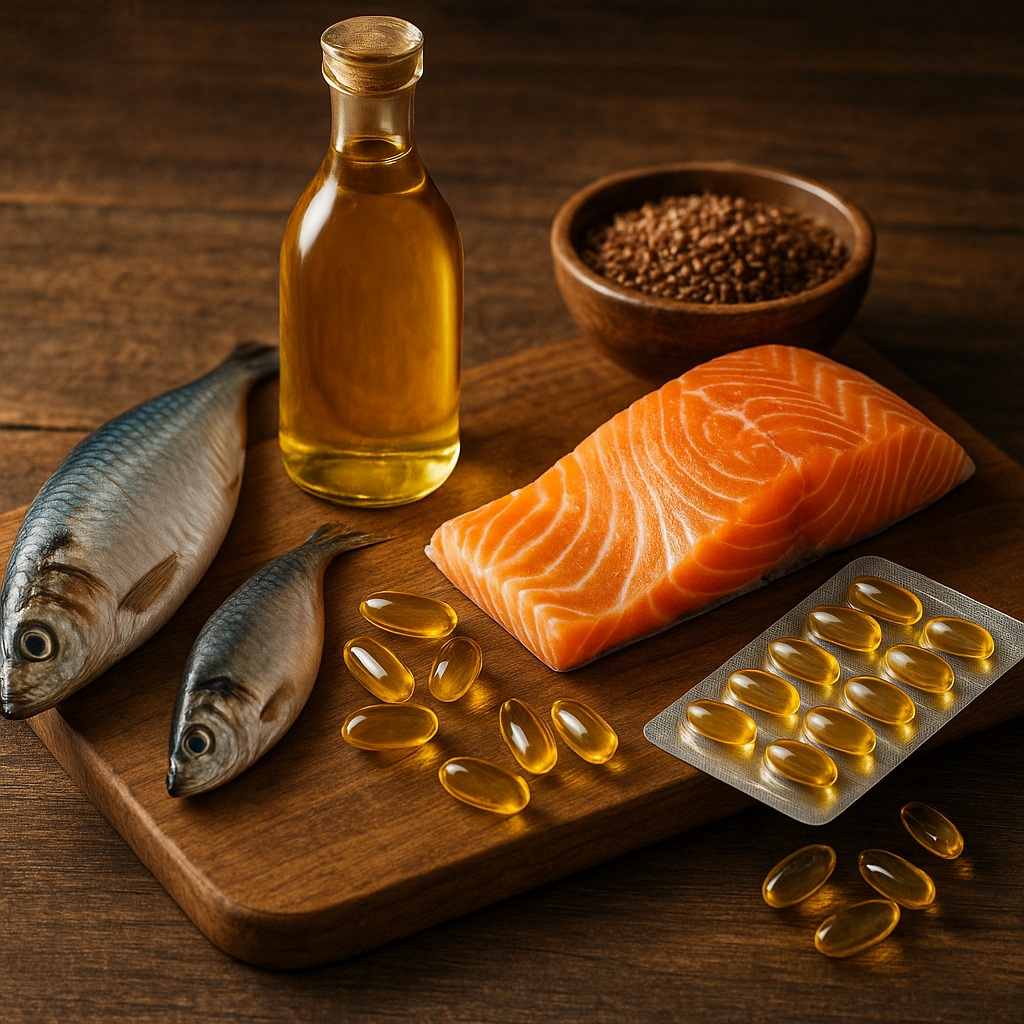
The Best Sources of Healthy Fats
Restoring a living lipid metabolism is not just about removing bad fats; it also requires consciously choosing the right sources, those that truly nourish, respect biology, and support inner clarity. Discernment is essential here.
Natural Animal Fats
Natural animal fats are among the most stable and nourishing. Rich in saturated and monounsaturated fatty acids, these fats are stable when heated and ideal for slow or medium-temperature cooking. They provide the body with the lipid foundation it needs for cell membranes and hormones. Ghee, stripped of the proteins and sugars found in butter, withstands higher temperatures and remains one of the best cooking fats.
Stable Plant Fats
Stable plant fats also offer high thermal stability and provide medium-chain triglycerides (MCTs). These MCTs are rapidly metabolized by the liver to produce ketones, the clean fuel for the brain and cells. Coconut oil is therefore suitable for both gentle cooking and incorporation into cold preparations to support a ketogenic state.
Fats Rich in Monounsaturates
Plant fats rich in monounsaturated fats, such as extra-virgin olive oil and virgin avocado oil, are excellent when used raw for dressing dishes and bringing suppleness and fluidity to cell membranes. They should neither be refined nor heated beyond their smoke point. For olive oil, only the “extra-virgin” cold-pressed label guarantees an undenatured oil. Avocado oil, meanwhile, can withstand moderate temperatures, but is most beneficial when used raw.
Omega-3s
Omega-3 sources are essential for restoring inflammatory balance. When present in the right proportion, these fats nourish the brain, regulate immunity, and calm inflammation.
Other Oils
Certain fragile vegetable oils, such as walnut, flaxseed, or hemp oil, should be consumed exclusively raw, in small amounts, and always very fresh, stored in the refrigerator in opaque, sealed bottles. They must never be heated or stored for long periods. They can be used occasionally to enrich a dish, not as a base for cooking.
In practice, discernment means prioritizing stable, living fats, choosing very fresh, cold-pressed extra-virgin oils for raw use, strictly limiting fragile oils, and reserving cooking for stable, saturated fats. This allows you to restore a harmonious lipid metabolism and inner clarity, free from inflammation and overload.
Choosing your fats thus becomes an act of sovereignty. It is a refusal of industrial standardization, a return to the quality and light contained within living matter. Every time you opt for a stable, pure fat suited to its purpose, you nourish not only your body but also your inner fire, the fire that sustains longevity and the peace of the nervous system.
Fats According to Traditional Chinese Medicine
In the Chinese energetic view, fat (Zhi) represents the concentrated nourishing essence of flesh. It belongs to the Earth-Fire sphere: it supports Yang while nourishing Yin, warms without inflaming, and lubricates without clogging when consumed in moderation.
Its nature varies by animal: lamb fat is warm and tonic, beef fat is tepid and strengthening, pork fat is cooler and softening, duck fat is neutral and nourishing to Yin, while chicken fat remains balanced and beneficial for the Spleen. In all cases, these fats are seen as concentrates of Jing, the vital essence. They sustain physiological warmth, nourish the marrow and brain (governed by the Kidneys), and stabilize emotions, which modern science translates as better hormonal and nervous stability.
The ancients said: “Fat nourishes the marrow; marrow nourishes the spirit.”
But as always, excess reverses the benefit: overconsumption of fats, especially when combined with cold or sweet foods, creates dampness and stagnation. This sugar + fat mixture, typical of modern industrial food, forms Tan, phlegm, the root of many diseases according to TCM.
To deepen your understanding of the dietary factors that strengthen or weaken our sovereignty, continue here:
Want to go further and access the full analyses, practical guides, and exclusive content? Join the Premium space.
Sources and references for this article (click to expand)
- [Physiology & Role of Fats] Meta-analysis: Saturated fat & CVD (Siri-Tarino et al., 2010)
- [Physiology & Role of Fats] Re-evaluation of the diet-heart hypothesis: Minnesota Coronary Experiment (Ramsden et al., 2016)
- [Oxidation & Rancidity] You Are Poisoning Yourself with Vegetable Oils (Dr. Boris Dufournet), video
- [Oxidation & Rancidity] Lipid Oxidation (Frankel, 2014), reference work
- [Omega-6 / Omega-3 & Inflammation] The importance of the omega-6/omega-3 ratio (Simopoulos, 2002)
- [Omega-6 / Omega-3 & Inflammation] Health implications of high dietary omega-6 PUFA (Patterson et al., 2012)
- Astrup et al., 2020, “Saturated Fats and Health: A Reassessment and Proposal for Food-Based Recommendations” (J Am Coll Cardiol, 76(7):844-857)
- Effects of a Carbohydrate Meal on Lipolysis