The mitochondrion, sacred forge of our cells
“Mitochondria play a central role in aging and in many degenerative diseases.”
Bruce Ames
🔍 No time to read it all? Here’s the page summary:
- The mitochondrion is not a “power plant”: it’s an organelle of bacterial origin, with its own DNA, its own rules, and a 2-billion-year memory.
- It is passed down only through your mother, and her mother before her, for hundreds of thousands of years. Your maternal lineage literally lives inside you.
- It doesn’t just produce energy: it regulates programmed cell death, manufactures all your steroid hormones, regulates your immunity, and governs your aging.
- Mitochondrial dysfunction is now recognized as the silent root of nearly all chronic diseases: cancers, Alzheimer’s, diabetes, chronic fatigue.
- Sugar, industrial oils, and oxidative stress are its three major enemies, and our modern lifestyle concentrates all of them.
- The gut microbiota and the mitochondrion are in constant dialogue: without butyrate produced by your beneficial gut bacteria, your gut mitochondria shut down and your intestinal wall weakens.
- A mitochondrially depleted brain is a more vulnerable, less sovereign brain: the connection between cellular energy and inner clarity is real and documented.
✨ Understanding your mitochondrion means understanding where your vitality comes from, and why it collapses.
🎧 Audio version of this page
Audio version of this page available only with a Premium membership
Explore this page
The functions of mitochondria are among the territories least understood by the general public, yet among the most documented by science. We think we can sum them up in two words: energy production. That’s true. And it’s terribly incomplete.
The reality is infinitely more dizzying, and infinitely more important for understanding who we are, why we age, why we fall ill, why we burn out, why we sometimes lose the thread of who we are.
The mitochondrion is not a mere biological cog. It is a living entity in its own right. It has its own memory. Its own DNA. Its own history, two billion years old. It decides whether our cells live or die. It manufactures our hormones. It conditions our mental clarity, our discernment, our capacity to feel and to think freely.
And it was passed down to us by our mothers, and the mothers of our mothers, in an unbroken lineage stretching back to the dawn of humanity.
What we eat, breathe, feel, and live each day either stokes it or extinguishes it.
This page exists so that we never extinguish it again.
We are bacterial beings
About two billion years ago, the Earth was populated by simple single-celled creatures. No plants. No animals. No consciousness. Just primitive cells surviving as best they could in a hostile world.
And then something extraordinary happened.
A cell engulfed a bacterium. Not to digest it, but to live with it. The bacterium, instead of dying, settled in. It continued to live inside that cell. And the two began to form something new: a symbiotic alliance that would change the destiny of all complex life on Earth.
That bacterium is what we now call the mitochondrion.
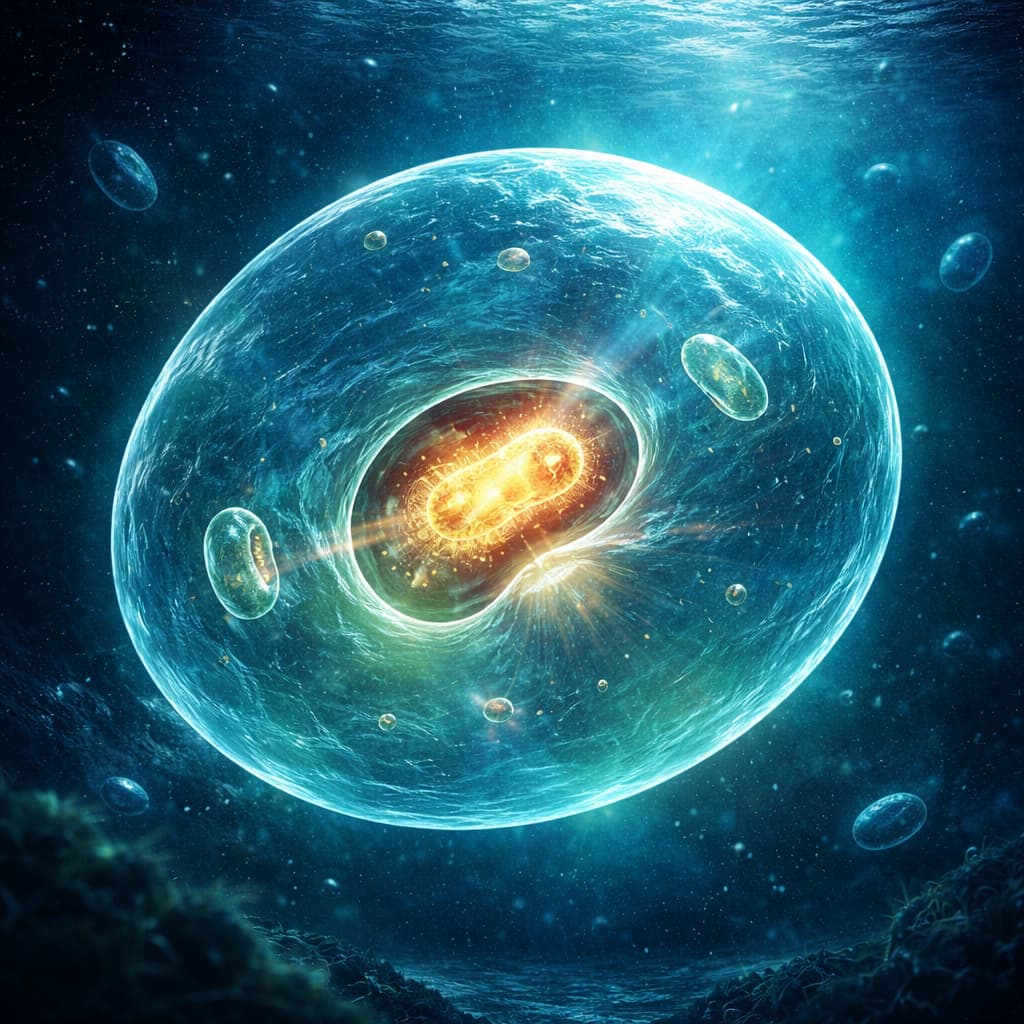
This is not a metaphor. This is not a poetic image. This is literally what happened. And the proof is there, in each of our cells, visible to any biologist: the mitochondrion still has its own DNA (distinct from ours) because it was, originally, an independent living being.
This theory is called endosymbiosis. It was proposed and defended with extraordinary tenacity by the biologist Lynn Margulis in the 1960s, against the entire scientific community of the time, which rejected it. It took decades to be recognized. Today it is part of every cell biology curriculum in the world.
Lynn Margulis said something staggering:
“We are not individuals. We are communities.”
And she was right, in the most literal and biological sense of the term.
Each of our cells contains between 200 and 2000 mitochondria, depending on the organ’s activity level. The heart and the brain, our most energy-hungry organs, contain the highest concentrations. The human body houses about 37 trillion of them in total. As many as human cells.
We are not alone in our own body. We never have been.
What this actually changes and why antibiotics weaken us at the deepest level
Here is something very few doctors ever mention.
Because the mitochondrion is of bacterial origin, because it shares a structure and DNA close to certain bacteria, it is vulnerable to antibiotics.
Antibiotics are designed to destroy bacteria. And they do it very well. But in some cases, notably with fluoroquinolone and tetracycline family antibiotics, they also attack mitochondria. Not intentionally, but because the mitochondrion resembles them too closely.
A study published in Science Translational Medicine (Kalghatgi et al., 2013) documented this phenomenon. The researchers Kalghatgi et al. (2013) showed that certain antibiotics induce massive mitochondrial oxidative stress, even in uninfected mammalian cells.
This is not a reason to refuse all antibiotics in the case of a serious infection. It is a reason to understand that every course of antibiotics carries a real mitochondrial cost, and that cost deserves to be compensated.
Mitochondrial DNA and Its Two Billion Years of History
Inside each of our cells, there are two types of DNA.
The first, the one everyone knows, is nuclear DNA. It is housed in the cell’s nucleus. It contains roughly 20,000 genes. This is what determines the color of our eyes, our morphology, and a large part of our physiology. It comes half from our father, half from our mother.
The second, the one almost no one mentions, is mitochondrial DNA. It is not found in the nucleus. It is lodged inside the mitochondrion itself, like a living memory of the time when it was still a free bacterium. It contains only 37 genes, but these 37 genes are absolutely critical. They directly code for the machinery of cellular energy production.
And here is what makes this DNA unique and profoundly different from nuclear DNA: It is far more vulnerable.
Nuclear DNA is protected by sophisticated repair mechanisms. It is coiled, packaged, constantly monitored. Mitochondrial DNA, on the other hand, is exposed directly at the heart of the energy machinery, where the most intense and oxidizing reactions in the cell take place. It mutates up to 10 times faster than nuclear DNA. And its repair capabilities are far more limited.
It is precisely for this reason that the mitochondrion is the first organelle to suffer from our modern lifestyle, before symptoms even appear, and before blood tests ever show it.
Oxidative stress hits it first. Excess sugar hits it first. Toxins hit it first.
Mitochondrial DNA damage accumulates silently, for years, before the body sounds the alarm.
Researcher Douglas Wallace, pioneer of mitochondrial genetics at the University of Pennsylvania, has devoted his career to demonstrating that the accumulation of mitochondrial DNA mutations is one of the central mechanisms of aging and degenerative diseases. His work is now a global reference.
And these signals (unexplained chronic fatigue despite normal lab results, slow recovery after exertion or illness, persistent brain fog, increased sensitivity to stress and infections) are not in our heads. They are in our mitochondria. Standard medicine does not yet connect them to their true origin because it does not measure the state of mitochondrial DNA. It measures blood sugar, cholesterol, inflammatory markers, but not this deep cellular memory that suffers in silence.
The good news, and we will return to this, is that mitochondrial DNA responds remarkably well to certain nutritional and lifestyle approaches. Mitochondria regenerate. They create new copies of themselves. They can be protected.
Far More Than an Energy Factory
Ask anyone what the mitochondrion does. The answer will always be the same: “it produces energy.”
True enough. But reductive to the point of absurdity.
Saying the mitochondrion produces energy is like saying the sun warms your hands. Technically accurate. Yet so incomplete it becomes misleading.
Here is what the mitochondrion really does, and what is almost never taught to the general public.
It produces ATP, yes. But how?
ATP, adenosine triphosphate, is the universal molecule of cellular energy. Every movement, every thought, every heartbeat consumes it. And our body produces the equivalent of its own body weight every single day. Yes, every day! That is the level of work our mitochondria carry out in silence, never stopping.
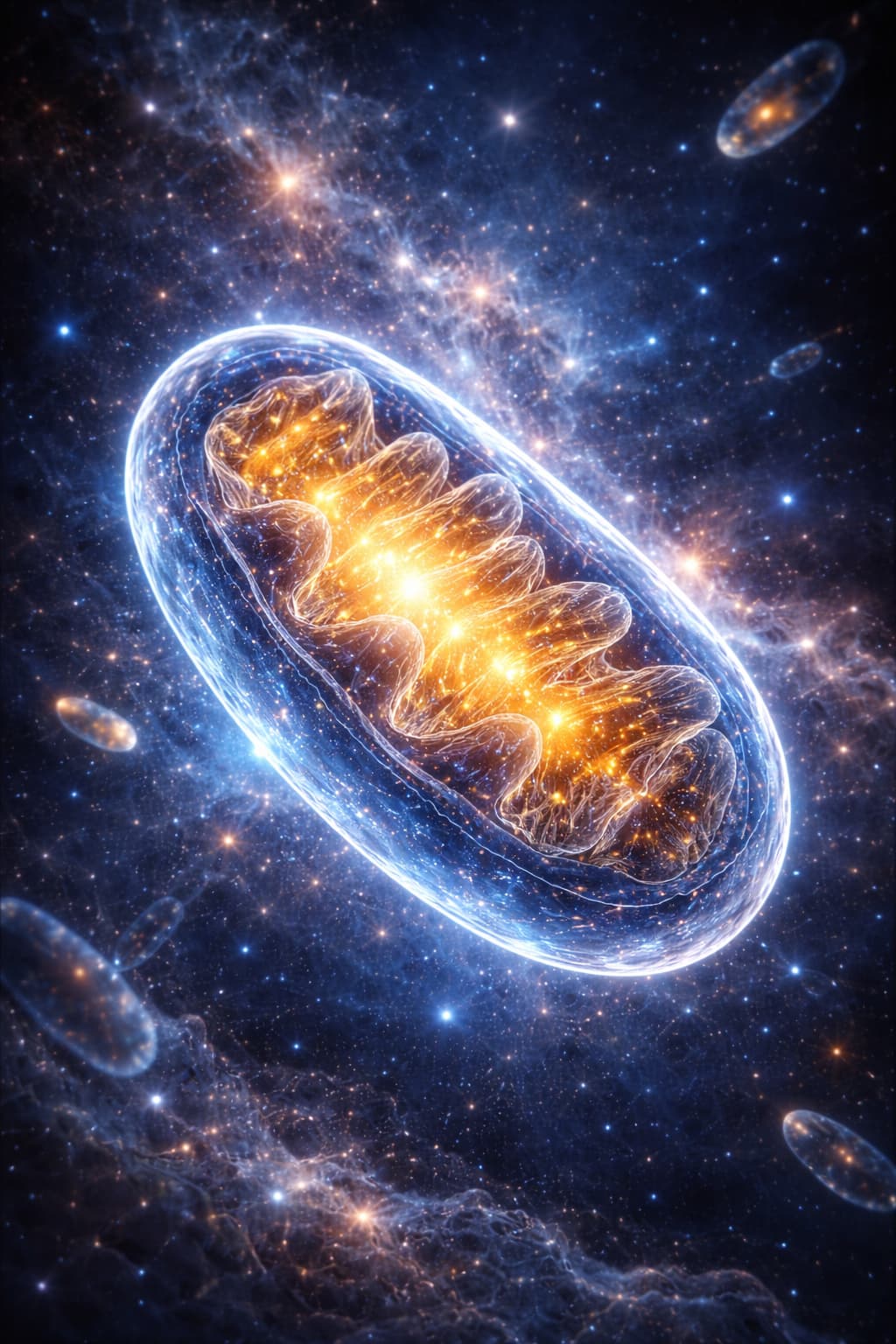
This process is called oxidative phosphorylation. It takes place on the inner membranes of the mitochondrion, membranes folded upon themselves into structures called cristae, and it involves a chain of reactions of staggering precision and complexity. Electrons pass from molecule to molecule like a biological electrical circuit, and this cascade generates the energy that recharges ATP.
It is one of the most sophisticated machineries nature has ever produced.
ATP is only the beginning
The mitochondrion is also:
A hormone factory. All steroid hormones (cortisol, testosterone, estrogens, progesterone, DHEA) are manufactured from cholesterol that enters the mitochondrion and exits transformed. Without functional mitochondria, no hormones. It’s that simple and that radical.
A calcium regulator. The mitochondrion stores and releases calcium inside cells, thereby coordinating muscle contraction, nerve transmission, and dozens of other vital processes.
A biological thermostat. In certain tissues, notably brown fat, mitochondria produce heat directly, without going through ATP. This process is called thermogenesis. It is what keeps us alive in extreme cold. And it is what certain approaches like cold exposure seek to stimulate.
An immune conductor. Mitochondria communicate constantly with the immune system. They emit signals that activate or calm inflammation. A damaged mitochondrion sends alarm signals that trigger an inflammatory response even in the absence of a real infection. This is one of the mechanisms of low-grade chronic inflammation that silently poisons millions of people.
A judge of cell life or death. The mitochondrion decides whether a cell should live or die. This process is called apoptosis, programmed cell death. When a cell is too damaged, too old, or potentially dangerous, it is the mitochondrion that gives the signal for its elimination. When this mechanism malfunctions, dangerous cells survive. This is one of the documented links between mitochondrial dysfunction and cancer.
A producer of light. Yes, the mitochondrion emits biophotons, particles of ultra-weak light. This phenomenon, documented by physicist Fritz-Albert Popp and other researchers, suggests that living cells communicate through light and that the mitochondrion is one of its main sources. We will return to this: it is one of the most fascinating and least explored territories in all of modern biology.
This is what the mitochondrion truly is. Not a power plant. Not a simple metabolic cog: a living being in its own right, at the heart of each of our cells, simultaneously orchestrating our energy, our hormones, our immunity, our heat, our cell death, and perhaps our inner light.
When you understand this, you understand why its dysfunction lies at the root of nearly everything that weakens us.
Brown Fat: An Organ Fading Away
There are two types of fat in our body. White fat, the one everyone knows, stores energy. Brown fat does the exact opposite: it burns it. And it can do this because it is literally packed with mitochondria. That is, in fact, what gives it its dark color.
Its role? To produce heat directly, without going through ATP. This is mitochondrial thermogenesis. Newborns are saturated with it: it’s their natural heating system. Adults have much less. And in our modern societies, it is disappearing.
The reason is simple: what is not used atrophies.
We live at 20–22 degrees Celsius permanently. Our bodies never need to activate their thermogenesis anymore. Brown fat falls asleep for lack of stimulation, exactly like a muscle we no longer use. Excess sugar, industrial oils, a sedentary lifestyle, and lack of sleep do the rest.
Studies from the Joslin Diabetes Center at Harvard show that obese and diabetic people have significantly less active brown fat than metabolically healthy people. This is no coincidence: it is a mechanism.
What about populations in tropical countries?
One might think they don’t need it since it’s hot. But the reality is more subtle. Traditional peoples in tropical zones who still live according to their ancestral ways (no air conditioning, exposed to natural temperature variations between day and night, fed a traditional diet) maintain more active brown fat than most Westerners.
On the other hand, and here is the tragic paradox, those who adopt the Western lifestyle see metabolic diseases explode even faster than Western populations themselves. Studies conducted in India, Mexico, and sub-Saharan Africa document this explosion of type 2 diabetes and obesity in urbanized populations. Their biology, adapted to millennia of ancestral life, is particularly vulnerable to this metabolic shock.
The good news? Brown fat can be reactivated. Regular exposure to cold, even moderate, is enough to restart its mitochondrial thermogenesis. A cool shower in the morning. An open window at night. A winter walk. Simple gestures we will discuss in detail later.
The ROS Paradox: When Poison Becomes Messenger
We’ve been sold free radicals as absolute enemies. Destructive molecules to be neutralized at all costs, with antioxidants, supplements, superfoods. An entire industry built on this fear.
The reality is infinitely more nuanced, and far more fascinating.
ROS, reactive oxygen species, are produced naturally in the mitochondria during energy production. They are unstable, highly reactive molecules capable of damaging DNA, proteins, and cell membranes. In excess, yes, they are destructive. That’s oxidative stress, implicated in accelerated aging and nearly every chronic disease.
But here’s what the antioxidant industry doesn’t tell you: In normal physiological amounts, ROS are essential messengers.
They are not waste, not nature’s mistakes: they are a language. A sophisticated cellular communication system our cells use constantly to adapt, defend, and repair.
Concretely, in normal amounts, ROS:
- Signal stress to the cell, triggering repair and adaptation mechanisms
- Activate the body’s natural antioxidant defenses, notably via a protein called Nrf2, the master regulator of resistance to oxidative stress
- Stimulate mitochondrial biogenesis: the creation of new mitochondria, via PGC-1α
- Participate in immunity: immune cells use ROS to destroy pathogens
- Regulate apoptosis: programmed cell death, signaling when a cell is too damaged to be repaired
Researcher Michael Ristow of ETH Zurich has published groundbreaking work on this. His studies showed that blocking ROS with excess antioxidants, particularly high-dose vitamin C and E, cancels the benefits of physical exercise. Why? Because it’s precisely the ROS spike produced during effort that triggers muscular and mitochondrial adaptation.
In other words, trying to eliminate all free radicals is like trying to silence our cells’ alarm system.
That’s not wisdom. That’s biological sabotage.
The real problem isn’t the existence of ROS, it’s their imbalance. When ROS production exceeds the body’s natural regulatory capacity due to excess sugar, toxins, chronic stress, industrial oils, then oxidative stress becomes destructive.
The solution, therefore, is not to flood the body with synthetic antioxidants, but to restore balance, by eliminating what overloads ROS production and supporting the body’s natural antioxidant systems.
Nature didn’t create ROS by mistake. She created them as a tool. We are the ones who turned them into poison, by saturating our mitochondria with everything they don’t know how to handle.

A memory that travels through time
The mitochondrion is not passed down like nuclear DNA, half from father, half from mother. It is transmitted solely through the mother. Always. Without exception.
The maternal egg contains hundreds of thousands of mitochondria. The sperm carries almost none. And the few paternal mitochondria that do enter the egg during fertilization are actively destroyed by the cell. Nature made a choice. A radical, deliberate choice whose full implications we have yet to grasp.
What this means in concrete terms: all your mitochondria come from your mother. And from your mother’s mother. And from her mother’s mother. In an unbroken lineage, never mixing with the paternal line, stretching back to the first woman from whom we all descend.
Geneticists call her Mitochondrial Eve. She lived roughly 150,000 to 200,000 years ago in Africa. And her mitochondria, slightly mutated over the generations, still burn today in every one of our cells.
But here is what is even more troubling:
What your mother lived through, her stress, her trauma, her deficiencies, her joys, left measurable traces in her mitochondria. And those traces were passed on. This is called maternal mitochondrial epigenetic transmission, a fast-growing field of research.
Studies on rats and mice suggest that stress experienced by the mother during gestation alters the mitochondrial DNA transmitted to her offspring. Their offspring are born with less efficient mitochondria and more readily develop anxiety, depression, and metabolic fragility.
The memory of our mothers lives in our cells. And understanding this profoundly changes how we envision our own health and our own healing.
Two Invisible Worlds: Mitochondria and Microbiota
People talk more and more about the microbiota, those billions of bacteria that populate our gut and govern an immense part of our health. People talk more and more about the mitochondria. But what almost no one ever talks about is the permanent conversation taking place between the two.
And yet, this conversation is fundamental.
Let us recall: the mitochondrion is of bacterial origin. It was once a bacterium. The microbiota is a bacterial world. It is therefore not surprising, biologically speaking, that these two universes speak to each other. What is surprising is the intensity and depth of this dialogue.
Here is what science is beginning to document:
The microbiota produces metabolites, molecules from its digestion of our food, that directly influence mitochondrial function. Short-chain fatty acids, notably butyrate, produced by good gut bacteria, are a direct fuel for the mitochondria of our colon cells. Without a healthy microbiota, no butyrate. Without butyrate, intestinal mitochondria weaken. And when intestinal mitochondria weaken, the gut wall becomes fragile, inflammation sets in, and it spreads throughout the body.
In the other direction, the state of our mitochondria influences the health of our microbiota. Excessive mitochondrial oxidative stress alters the intestinal environment, favoring pathogenic bacteria at the expense of beneficial ones.
It is a circle. When virtuous, it carries us. When it degrades, it drags us down.
And this circle is directly influenced by what we eat. Excess sugar feeds bad bacteria and overloads mitochondria simultaneously, degrading both systems at once. Quality natural fats nourish good bacteria AND protect mitochondria, strengthening both systems at the same time.
What we put on our plate does not only speak to our gut. It speaks to each of our cells, right into the heart of their mitochondrial forge.
The implications of this dialogue for our overall health, our immunity, our mental health, and our metabolism are profound. And they are far from being fully elucidated. This is one of the most fertile territories of modern biology.
Mitochondria, Hormones & Consciousness
We have explored what the mitochondrion is. What it does. The memory it carries. The dialogue it maintains with our microbiota.
But we have yet to touch upon what is perhaps the most dizzying territory of all that science is beginning to understand about it.
The mitochondrion manufactures our hormones. All steroid hormones (cortisol, testosterone, estrogens, progesterone, DHEA) are born inside the mitochondrion. And in the brain, it produces even subtler molecules called neurosteroids, some of which directly modulate our states of consciousness, our capacity for discernment, our emotional depth, and our resistance to stress.
This link is not metaphorical. It is biochemical and largely documented. Science is only beginning to measure its scope.
And it raises a question that almost no one is asking yet: what if our mental clarity, our ability to think freely, to feel deeply, to exercise our discernment… depended in part on the state of our mitochondria?
What if a mitochondrially depleted brain were a more vulnerable, more manipulable, less sovereign brain?
Researchers like Martin Picard at Columbia University and Douglas Wallace at the University of Pennsylvania are opening doors that lead far beyond classical biology. Their work suggests that the mitochondrion is not only at the heart of our metabolism. It is at the heart of what we are capable of perceiving, feeling, and understanding.
This territory (hormones, neurosteroids, consciousness, cognitive sovereignty, and the spiritual dimension of the mitochondrion) is explored in depth as our exploration continues.
What we can already say here is simple and fundamental: taking care of your mitochondria is not only taking care of your energy. It is taking care of your inner freedom.
The fire waiting to be rekindled
Together we have crossed territories that modern biology is only beginning to map. And yet, everything we have just explored converges on a simple, deep truth you can actually put to work.
The mitochondrion is not a cellular detail. It lies at the core of who we are: how we age, how we think, feel, and decide. It carries a memory two billion years old. It dialogues with our gut, produces our hormones, decides the life and death of our cells, and may well condition our capacity to be fully ourselves.
What you have just uncovered is only a first door.
Understanding what the mitochondrion is already changes a great deal. But the real question comes next: how do we protect this cellular energy, how do we sustain it, how do we repair what years of stress, deficiencies, or dietary mistakes have weakened?
This is exactly what we progressively explore inside the SLAKE universe.
Some resources will be directly accessible on the site. Others will take the form of guides and deeper explorations. The goal is always the same: to transform knowledge into real biological sovereignty.
If you want access to the free resources and to follow the next explorations on cellular health, you can simply join the SLAKE community.
Signing up gives you access to the resource library we are progressively making available.
The cell is where everything begins.
That is where the path starts.
Sources and references of the article (click to expand)
- “On the Origin of Mitosing Cells” (1967), by Lynn Sagan
- Bactericidal antibiotics induce mitochondrial dysfunction and oxidative damage in Mammalian cells
- A mitochondrial paradigm of metabolic and degenerative diseases, aging, and cancer: a dawn for evolutionary medicine
- Mitochondrial DNA in aging and disease
- A mitochondrial bioenergetic etiology of disease
- Antioxidants prevent health-promoting effects of physical exercise in humans
- Brown adipose tissue
- The Implication of Brown Adipose Tissue for Humans
- Molecular basis for maternal inheritance of human mitochondrial DNA
- All About Mitochondrial Eve: An Interview with Rebecca Cann
- Grandmaternal stress during pregnancy and DNA methylation of the third generation: an epigenome-wide association study
- Epigenetics of prenatal stress in humans: the current research landscape
- The Microbiome and Butyrate Regulate Energy Metabolism and Autophagy in the Mammalian Colon
- The interplay between mitochondria, the gut microbiome and metabolites and their therapeutic potential in primary mitochondrial disease
- Psychological Stress and Mitochondria: A Conceptual Framework
- An energetic view of stress: Focus on mitochondria