
Dairy Products
“When man respects nature, she nourishes him. When he distorts her, she turns against him.”
🔍 Short on time? Here’s the summary of this page:
Beyond lactose: the main causes of intolerance are A1 casein and heated (UHT) milk, and far more rarely lactose.
The A1 mutation: it appeared a few thousand years ago and was spread by industrial selection to produce ever more. Some hardy heritage breeds (Hérens, Guernsey, buffalo, and others) remain very largely, sometimes 100%, A2.
Yield against nature: Holstein = 10,000 L/year thanks to grain and soy. Hardy heritage breeds = fewer liters but healthier animals and richer milk.
Animal health: acidosis, ketosis, mastitis, a lifespan shortened to five or six years in intensive systems, against 10 to 12 years on grass.
Ethics and society: calves separated, family farms vanishing, distress, debt and unbearable pressure on farmers. All the while, billionaires buy up farmland to speculate on it.
✨ Conclusion: Behind every liter of milk lies a choice: to support the industry that exhausts animals, or to defend and support ethical farmers, quality and food sovereignty.
🎧 Audio version of the page
Page audio available only with the Premium subscription
Explore the page
Dairy Products: Beyond Lactose
Dairy products hold a special place in our diet. For decades they have been presented as essential for bone health and as a major source of calcium. Yet recent research and hands-on experience show that the reality is far more nuanced.
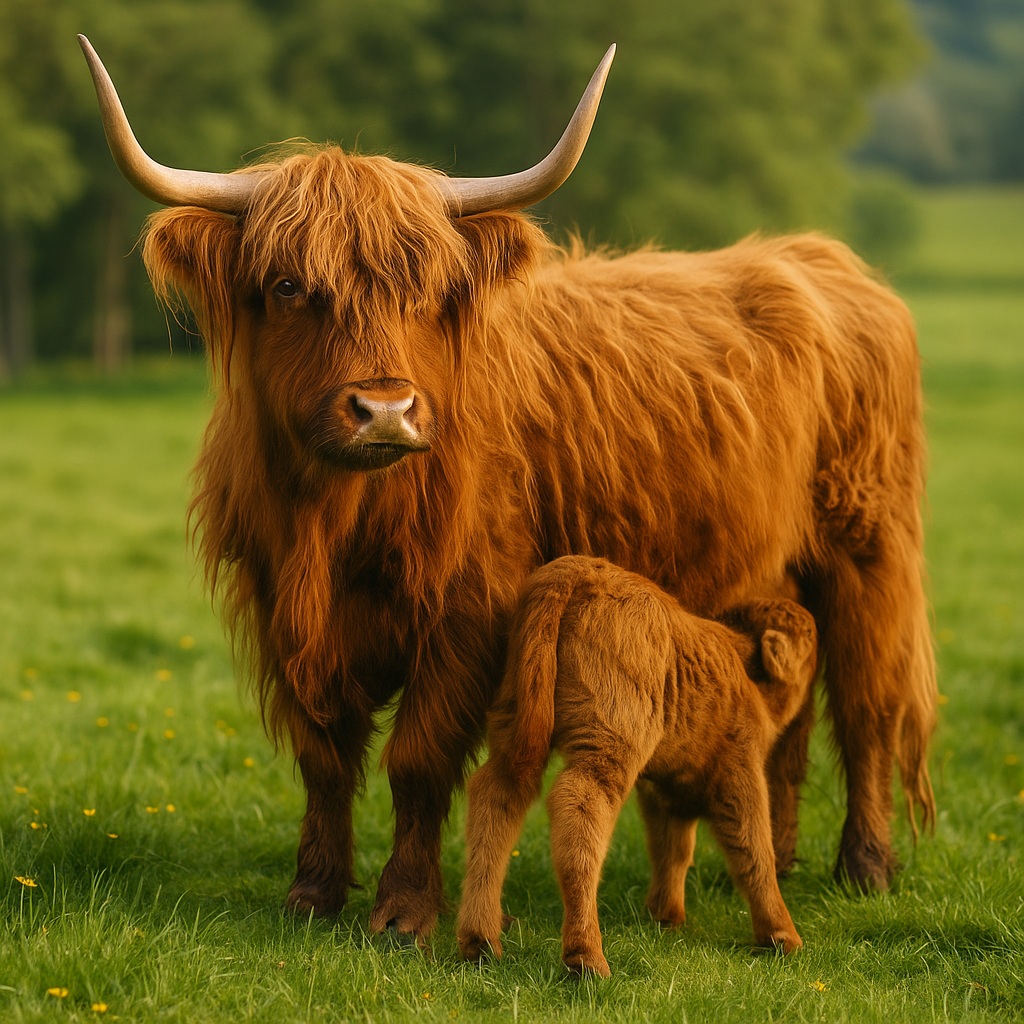
For a long time, problems associated with milk consumption were blamed on lactose intolerance, lactose being the natural sugar of milk. But the most recent studies make it clear that lactose is not the main culprit, except in people who are genuinely intolerant to it. In most cases, two other factors are what cause problems: casein, the main protein in milk, and the heat treatment applied to modern milk. Milk that has been pasteurized or sterilized at high temperature (UHT) has little left in common with raw milk. Heating denatures its proteins, destroys the enzymes that once made it easier to digest, and alters its structure to the point of turning it into a food that many people no longer tolerate. One telling fact: people who react badly to industrial milk handle raw, unheated milk far better, which confirms that processing plays an essential role in intolerances.
At the heart of the matter is casein above all. This protein, which makes up about 80% of the protein in cow’s milk, exists in several forms. One of them, beta-casein, comes in two variants: the original form, called A2, and a mutated form, called A1. The difference may seem tiny, but it changes everything.
A2 casein is the natural form, the one found in the milk of humans, goats, sheep, buffalo, and also donkeys and mares. In truth, every mammal produces A2 casein, with one exception: the domestic cow. It is in the cow, and in the cow alone, that a mutation appeared a few thousand years ago, giving rise to A1 casein. This particular protein is found today in most of the milk from breeds selected for high yield (Holstein, Simmental, Ayrshire, and others), and it is linked, during digestion, to the release of protein fragments with harmful effects, comparable to those of opioids.
Understanding the difference between A1 casein and A2 casein therefore means going well beyond the simple lactose debate. It means telling apart industrial milk, born of a genetic mutation and of selection geared toward quantity, from milk that has stayed true to the natural physiology of mammals, better tolerated and potentially beneficial.
The Story of the Mutation
A2 casein is the original form, present in the milk of every mammal, including the first domesticated cattle. But around five to ten thousand years ago, a spontaneous mutation appeared in the beta-casein gene of certain cows in Europe. Concretely, a single amino acid in the protein changed: the proline at position 67 was replaced by a histidine. That minuscule structural detail was enough to alter how the protein is digested and to create what we now call A1 casein.
Why did this mutation appear? On this point, science has no definitive answer. Point mutations are common in the genome, and this one may well have arisen by pure chance. Some researchers put forward the hypothesis that, in certain environments, it may have given carrier cows an advantage, perhaps in productivity or in adaptation to climate. But nothing allows us to confirm it. What we do know with certainty, on the other hand, is that diet did not cause the mutation. Modern grain-based feeding came along much later and does not explain its appearance.
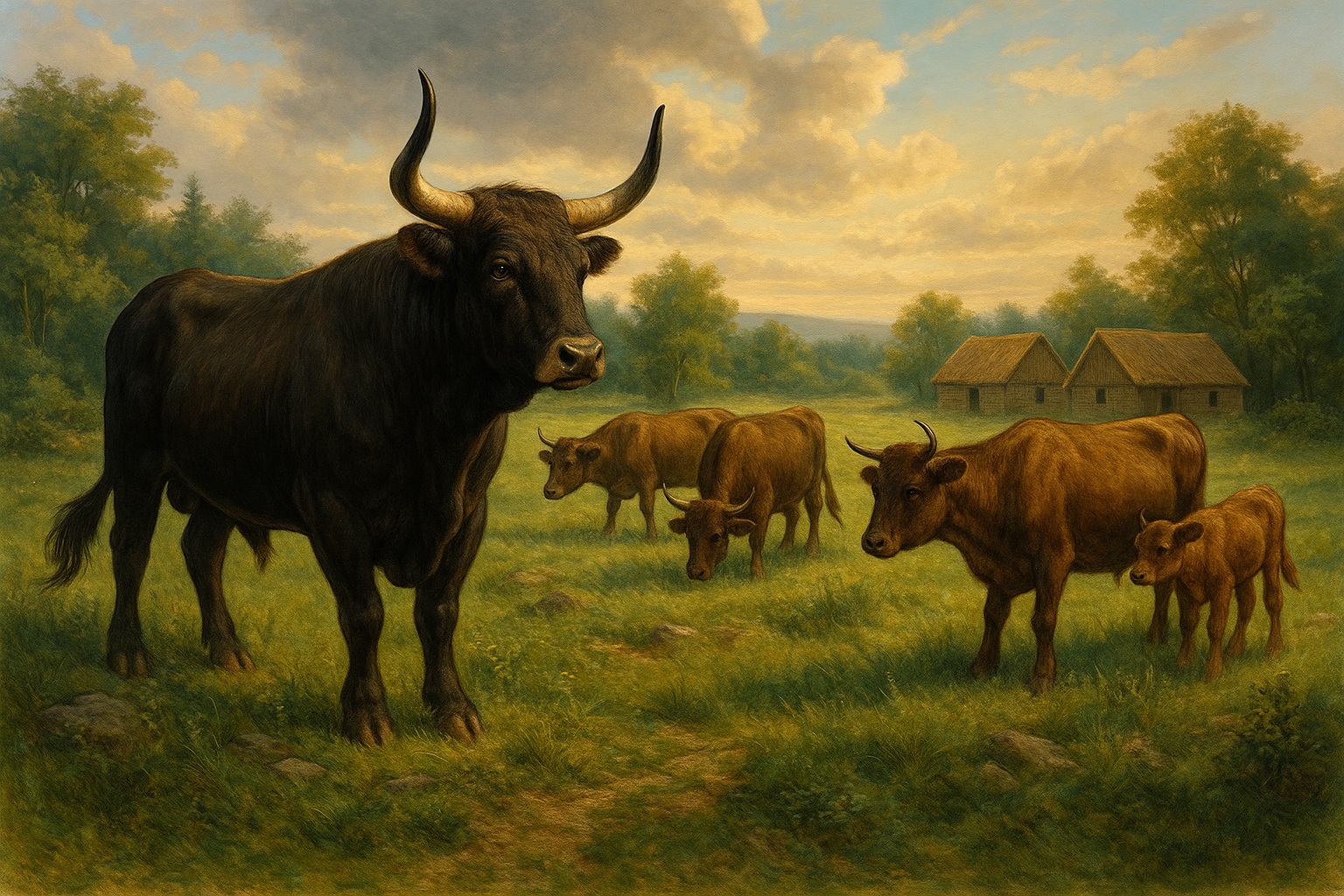
What allowed the mutation to spread on a massive scale was human selection. Populations of northern Europe favored cows able to produce ever greater volumes of milk. Now, the breeds where the mutation was present (Holstein, Simmental, Ayrshire, Friesian) were precisely the ones that delivered spectacular yields. Farmers had no knowledge of casein differences: they selected purely on the number of liters. By systematically choosing the most productive cows and spreading their genes through breeding, they propagated the A1 mutation throughout the entire modern dairy herd.
Even today, most dairy cows raised in intensive farming carry at least one copy of the A1 gene. Some are A1/A1 and produce only A1 casein, others are A1/A2 and produce a mix of A1 and A2. The cows that have remained 100% A2 belong for the most part to old, hardy heritage breeds (such as the Hérens cow in the Valais, the Guernsey, certain Jersey lines, or the zebus of Africa and Asia) that were never subjected to the same selection pressure.
In short, the appearance of A1 casein is probably a simple genetic accident. But its large-scale spread is the result of a human choice: the drive to produce ever more milk in quantity, at the expense of quality and of the health of the animals as much as that of consumers.
A Survey of the Breeds
The split between A1 and A2 casein is not uniform across the bovine world. Some breeds have become almost exclusively A1 because of industrial selection. Others are mixed, with a share of their animals still carrying the A2 gene. And a few breeds have kept the A2 profile intact, close to that of every other mammal.
The mainly A1 breeds are those selected in the 20th century for record volumes. The Holstein-Friesian, found in the Netherlands, the United States and across Europe, is the most widespread dairy breed in the world. It is almost entirely A1 or A1/A2. It is estimated that, depending on the herd and the region, between 20 and 40% of Holsteins may still be A2/A2 (and not a universal figure of under 5%). Their average productivity is 8,000 to 12,000 liters of milk per year, sometimes more in intensive systems. The Ayrshire, native to Scotland and Scandinavia, is also geared toward high yield and its milk is mostly A1. The Friesian, the old Dutch strain carrying the A1 mutation, was used as the genetic base for breeding the modern Holstein.
The mixed A1/A2 breeds offer significant potential, because they still contain A2/A2 animals, even if their proportion is low. The Simmental (Switzerland, Germany, Austria) is a mixed breed, with a majority of A1 or A1/A2 animals. It is estimated that around 10 to 15% of Simmentals in Central Europe could still be A2/A2, depending on the population. A Simmental produces on average 5,000 to 6,000 liters of milk per year in an extensive system and can climb to 7,000 or 8,000 liters in an intensive one with grain-based rations. An A2 Simmental produces as much as an A1 Simmental of the same line, because the casein gene has no influence on the amount of milk. The Montbéliarde, very common in Franche-Comté and used for Comté and Morbier, is mixed A1/A2. The Abondance, native to Haute-Savoie, produces rich milk used for reblochon and tomme and also shows a mixed distribution. The Tarentaise, known for its cheese-making milk, is likewise a mixed breed with a variable share of A2. The Jersey, native to the Channel Islands, produces very rich milk. It is mixed, but certain selected lines are 100% A2/A2. The Brown Swiss (Switzerland, Austria, northern Italy) remains mixed, still with a significant share of A2 animals. Finally, the Normande, an old French breed, also shows a mixed distribution and is used in particular for camembert.
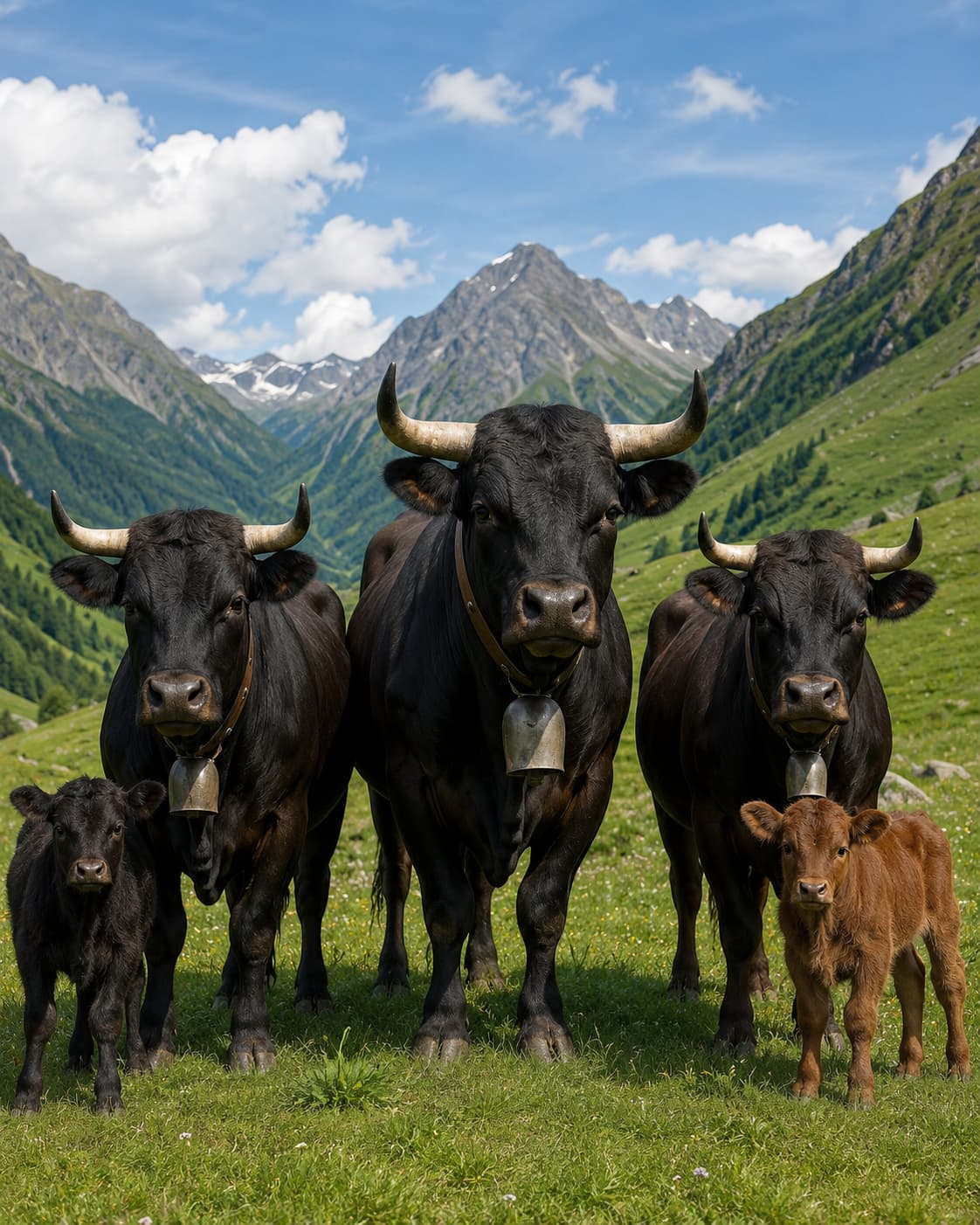
Some breeds have remained entirely A2 and are true survivors of the bovine heritage, spared from intensive selection. This is the case of the Hérens cow in the Valais, an emblematic hardy heritage breed known for its cow fights, whose milk is 100% A2. The Guernsey, native to the island of the same name, also gives naturally A2 milk, particularly rich in omega-3 and beta-carotene, which gives it its characteristic golden color. The zebus of Africa and Asia also produce exclusively A2 milk, widely consumed in tropical countries. The buffalo, present in Italy, India and Egypt, provides A2 milk used in particular for mozzarella di bufala. And of course, all the other non-bovine dairy species (goat, sheep, donkey, mare, camel) produce A2 casein exclusively.
In short, the A1 breeds are the ones that give the most liters. But to reach those spectacular volumes, they must be fed a diet enriched with grain and energy concentrates. Without those inputs, their yield drops sharply, because they were selected to produce well beyond what a natural diet of grass and hay allows.
The mixed breeds offer a way out: by testing and selecting the A2/A2 animals, a herd can gradually be rebuilt to 100% A2 without changing breed entirely.
The A2 breeds, for their part, represent a precious heritage. They produce less milk in volume, but milk that is richer, better tolerated and more valuable.
This point must be stressed: being A2 does not mean producing less milk within a given breed. An A2 Simmental produces as much as an A1 Simmental if they are fed the same way. What makes the difference in yield is not the casein gene itself, but the use of inputs: grain, soy and energy concentrates. The intensive breeds, selected to produce enormous amounts, can only reach their spectacular volumes with those inputs.
On the other hand, when an intensive breed (Holstein, Simmental) is compared with a hardy heritage one (Hérens, Abondance), the gap stays clear: 3,000 to 5,000 liters a year for the Hérens, against about 10,000 for a Holstein. That lower volume comes with sturdier animals, richer milk and a far greater potential for added value.
Natural Metabolism, Animal Health and Human Health
The cow is a ruminant built to live on grass and hay. In her rumen, a true fermentation vat, billions of bacteria turn fiber into volatile fatty acids (acetate, butyrate, propionate) that become her main source of energy. Like humans, cows have no need for dietary carbohydrates: they make the glucose they need through gluconeogenesis. Their natural state is therefore a metabolism based on the volatile fatty acids produced by fermentation and on gluconeogenesis, not a state of “permanent nutritional ketosis”.
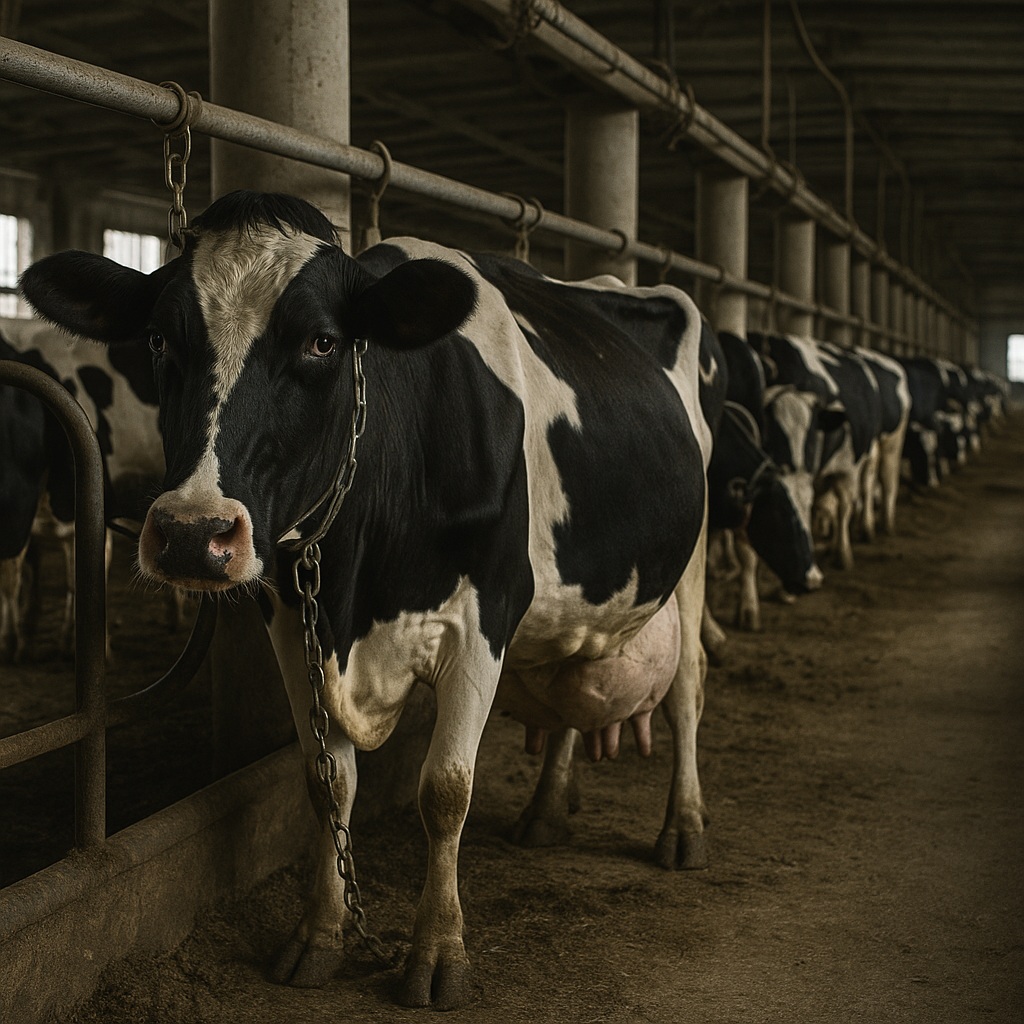
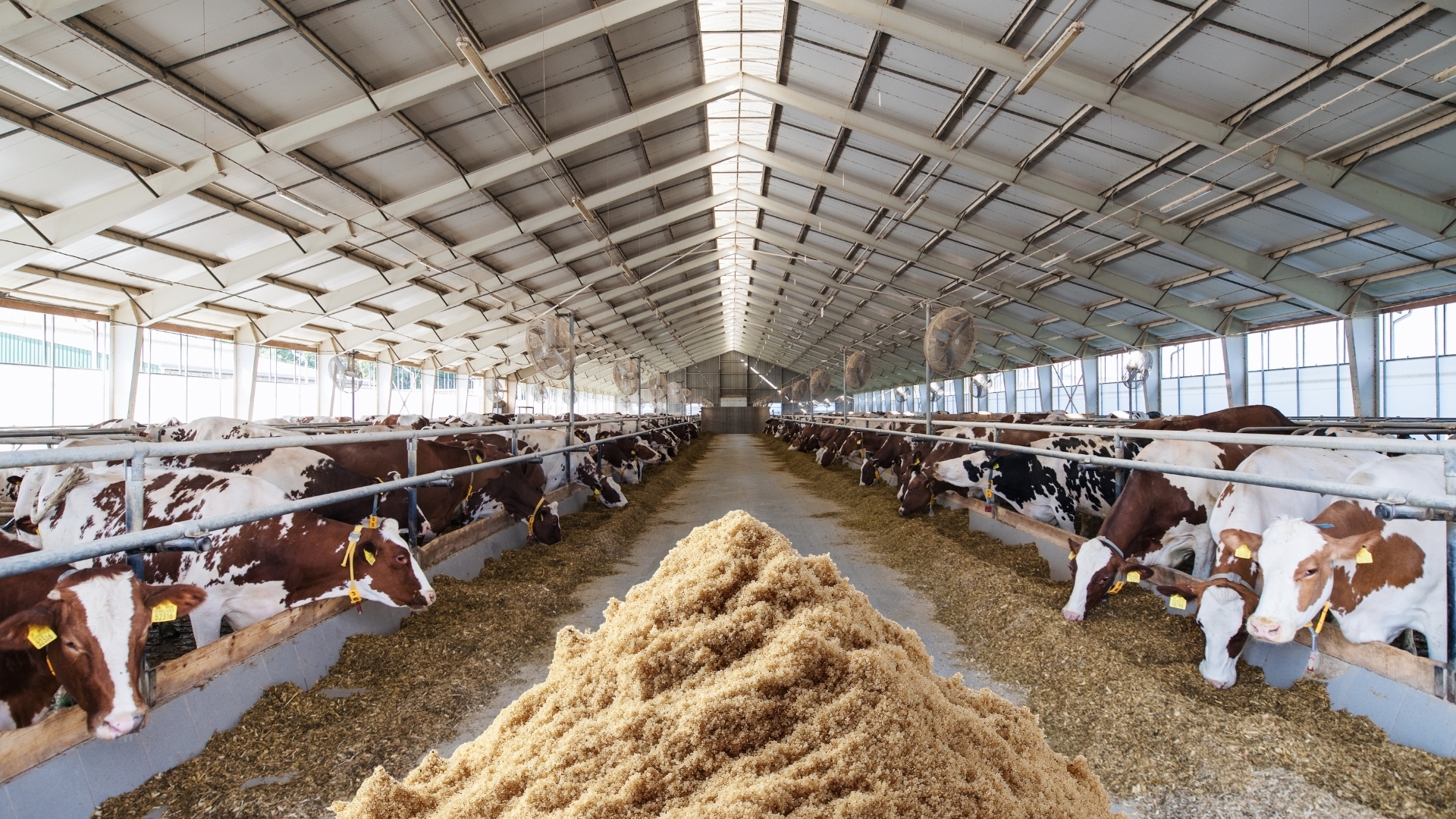
Everything changes when the fiber of grass is swapped for rations rich in grain and concentrates. The rumen turns acidic, the bacterial balance is thrown off, and pathologies typical of intensive farming appear: acidosis, postpartum ketosis, fatty liver, recurring mastitis, a drop in fertility. According to studies, between 25 and 40% of cows in early lactation show subclinical ketosis, and in some herds the rate exceeds 50%. An industrial Holstein rarely lives beyond 3 lactations, meaning 5 to 6 years, whereas a hardy heritage cow fed on grass can produce for ten years and more. In other words, the animal has been turned into a yield machine at the cost of a life expectancy cut in half.
These diseases cost farmers dearly: each episode of ketosis is estimated at between 200 and 300 € per cow, a case of mastitis around 200 € per case, not counting the drop in production and the antibiotic treatments. On average, veterinary costs and losses linked to metabolic diseases represent several hundred euros per cow per year. To this must be added the cost of inputs: grain, soy, silage maize, whose prices keep rising. Conversely, a herd fed solely on grass and hay costs far less in inputs and in care, even if the raw output is lower.
These feeding choices also directly shape the quality of the milk and our own health. We now know that fragments of gluten do not pass into the milk of grain-fed cows. Milk is naturally gluten-free. The reactions observed come instead from casein peptides and from a weakened gut. But the most striking impact is on the fatty acid profile. Milk from grass-fed cows contains more omega-3, more conjugated linoleic acid (CLA) and more fat-soluble vitamins (A, E, K2). Grain feeding, by contrast, raises the proportion of pro-inflammatory omega-6 and strips the milk of micronutrients. That is why an alpine cheese, made with pasture milk, has a nutritional value far superior to a cheese from lowland cows stuffed with maize.
In intensive systems, early culling is not seen as a loss but as a normal cog in the cycle. A Holstein rarely lives beyond 5 or 6 years, sometimes only 4. She is sent to the slaughterhouse, her carcass valued as cull meat, often turned into ground beef or ready meals. Meanwhile, the replacement is already waiting: the heifers born from her female calves take her place in the herd.
For the system, it is a profitable cycle: produce a lot, cull fast, replace at once. But the invisible cost is enormous. The animal is treated as a disposable machine. Every culled cow means a replacement heifer had to be raised, which costs about 1,800 to 2,500 € up to the first calving. Veterinary costs pile up (200 to 300 € per cow per year on average in intensive systems) and dependence on feed inputs represents several hundred euros more each year. The cull carcass, today, depending on weight and market, is worth between 1,700 and 2,100 € in France, 1,800 to 2,200 € in Germany, and between 2,700 and 3,200 CHF in Switzerland.
By contrast, a hardy heritage cow on grass lives 10 to 12 years, delivers 8 to 10 lactations and stays in good health. She costs little in inputs, little in care, and does not demand constant renewal of the herd. She produces fewer liters, but over twice as long, and with milk of better quality, worth more on differentiated markets (cheeses, farm products).
When we speak of A1 casein, the central question is the release, during digestion, of small fragments called casomorphins, in particular beta-casomorphin-7 (BCM-7). A1 casein is digested in a way that favors this release, whereas A2 casein releases far less of it. The difference does not lie in the presence or absence of BCM-7, but in the likelihood and the amount released.
Once formed, BCM-7 acts first in the gut, where it can bind to opioid receptors and disrupt digestion. It slows transit in some people, causes bloating, constipation or diarrhea, and can heighten intestinal inflammation. Normally, digestion breaks down most of this molecule, but small amounts, along with shorter fragments, can persist and stay bioactive in contact with the digestive lining.
And this is where the state of the gut plays a decisive role. In a healthy gut, well colonized by a rich and varied microbiota, most of these peptides are neutralized without trouble. But today, most people no longer have a solid microbiota. Antibiotics, many medications, pesticides and industrial food have depleted the gut flora, wiping out essential bacteria. For example, certain species able to break down oxalic acid, once present in most of us, are now largely absent. This invisible erosion of microbial diversity weakens the intestinal barrier.
Add to this a modern, inflammatory diet, saturated with sugars and starches that ferment and keep the gut porous. Gluten too, even in people without celiac disease, has been shown to transiently increase intestinal permeability. The result: in this already weakened terrain, peptides from milk, such as BCM-7, pass through more easily and trigger stronger effects than they once did.
This is why more and more people say they can no longer tolerate ordinary dairy products. It is not A1 casein alone that causes the problem: it is the meeting between a potentially active molecule and a gut weakened by our way of life.
In those who react to “ordinary” milk, switching to 100% A2 milk, from grass-fed cows and heated as little as possible, often improves things. But tolerance will always also depend on the health of the gut and of the microbiota.
The parallel with gluten is striking. Gluten also releases peptides called exorphins, which bind to the same receptors. Here again, this disrupts digestion and immunity, and in some people it affects mental balance. That is why many people sensitive to gluten also react to industrial dairy products: both activate the same mechanisms of digestive and nervous stress.
But the problem does not stop at A1 casein. It is made worse by the processing of the milk. Raw milk contains enzymes and bacteria that help digest proteins. Pasteurization destroys a large part of these natural aids. And UHT milk (ultra-high temperature), the kind most often found in supermarkets, goes even further: it denatures the proteins, strips the milk of vitamins, and makes casein even harder to digest.
In practice, a person drinking a glass of UHT milk from an intensive Holstein swallows a cocktail: A1 casein turned into BCM-7, an excess of pro-inflammatory omega-6 (because of maize and soy), and proteins altered by heat. This is a world away from the milk of a grass-fed, A2 cow, raw or simply aged into farmhouse cheese.
On the matter of farming practices, we must also be clear. In Switzerland, the law forbids permanent confinement with no outdoor access. Cows must have a minimum of regular time outside (even if some operations bend the spirit of the rule by cutting access to the strict minimum). In other countries, especially in giant industrial farms (the United States, parts of Eastern Europe), there are still farms where cows never see the outdoors, live on concrete slatted floors, and are managed like machines.
In France, most dairy cows go out to pasture, but this is not a legal requirement for every conventional farm. A share of the farms, especially the largest ones in Brittany or Normandy, keep the cows indoors most of the year, often fed on silage maize. In Belgium, the situation is similar: many family farms still let their cows graze, but in the more intensive areas, some cows go out very little. In Germany, tie-stall housing still exists, notably in Bavaria, even if it is increasingly criticized.
In other words, in Western Europe, everything depends on the farmer’s choice and on the production standard: grass-based systems do exist, but alongside them, intensive systems persist, sometimes far removed from the image of the cow in the meadow.
And yes, in some countries, atrocious practices persist (male calves killed at birth or sold for next to nothing, brutal slaughter). These images shock, and rightly so: they show how far a purely industrial logic can go.
This is why traceability and the consumer’s choice become essential. When we buy milk or cheese in a supermarket, especially cut-price UHT milk, we do not always know what lies behind it. But when we buy directly from a farmer who feeds his cows on grass, when we know his farm, his herd, his respect for the animals, we step into a completely different world.
Animal Health, Welfare, and the Consumer’s Responsibility
Speaking of casein and of the differences between breeds is not enough if we do not speak of those who produce it: the cows themselves and their calves. Behind every liter of milk there is an animal, and the way it is fed, cared for and raised makes all the difference.
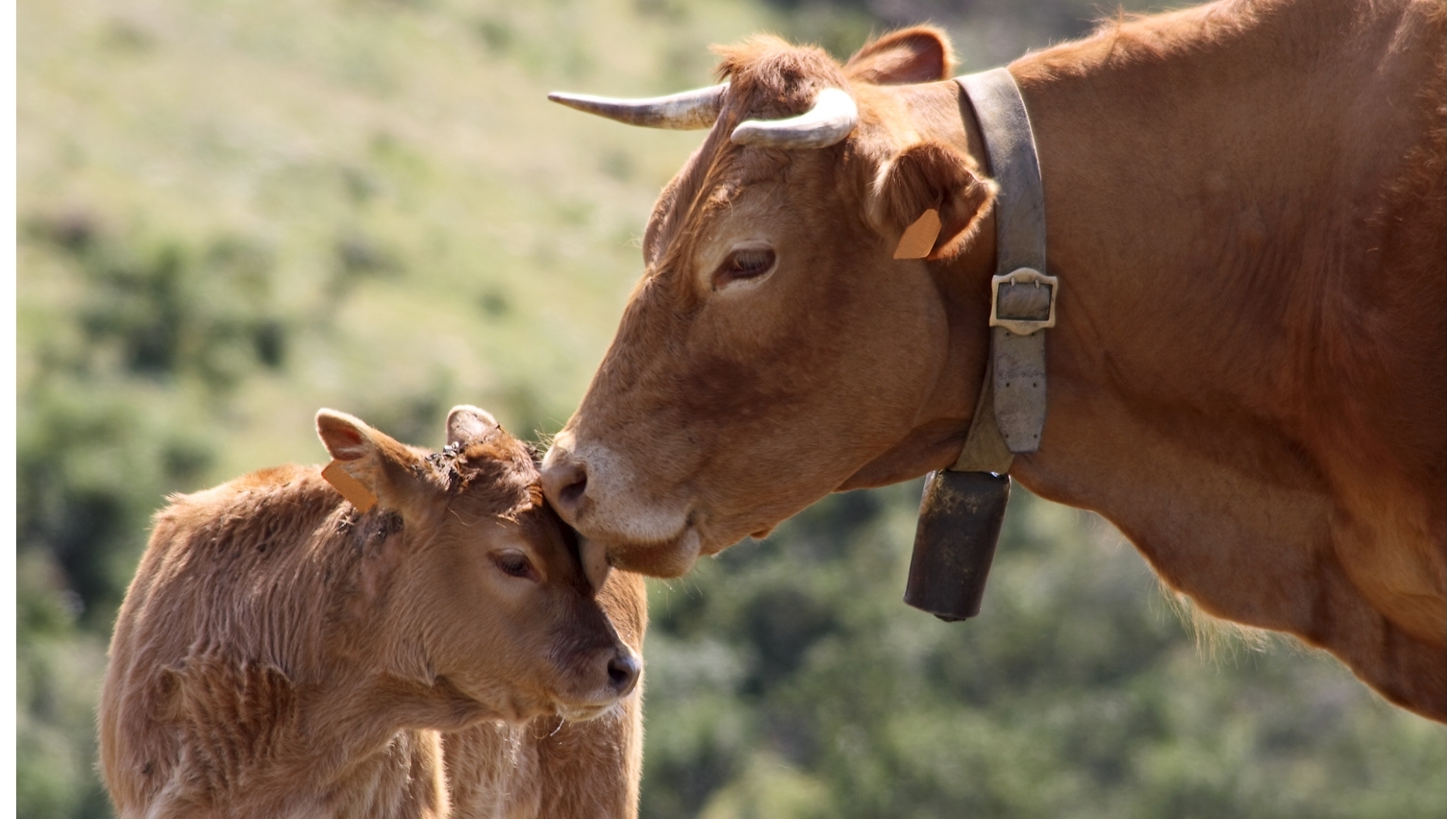
In the conventional dairy industry, the rule is simple: for a cow to give milk, she must calve. But in most operations, the calf is taken from its mother at birth or after a few days. It is then fed with reconstituted milk powder or with bulk pooled milk, often from A1 cows, enriched with grain, soy and supplements. This system weakens the calves: digestive troubles, respiratory infections, deficient immunity, dependence on antibiotics.
Veterinary studies show that early separation increases stress in both the calf and the mother, and that calves separated too soon have significantly higher rates of illness.
A systematic review (Beaver et al., 2019) concludes that there is no solid evidence that separation is beneficial for health, and that on the contrary it often raises the risk of diarrhea or respiratory disorders.
More recently, a study by Meagher et al. (2025) shows that calves kept with their mother display better behavior, more balanced growth and steadier health, even if other factors (access to pasture, quality of the environment) also come into play.
But what these studies often fail to take into account is the general state of the intensive breeds on which they are conducted. A Holstein, pushed genetically to produce dozens of liters of milk a day, lives in a state of chronic wear. She is often on antibiotics, fed unsuitable rations, and her immune system is constantly weakened.
Her calves are born already weakened, with a destroyed microbiota, a failing immunity and compromised health. Under these conditions, it is misleading to claim that the effects of mother-calf separation can be assessed in isolation: the breed itself has been degraded by decades of over-exploitation.
By contrast, hardy heritage breeds raised on grass show something entirely different: fewer diseases, fewer veterinary costs, calves that are vigorous and strong.
The mother-calf bond there plays its natural role fully, because it rests on healthy animals, respected in their physiology.
Ultimately, separating a calf from its mother cannot be justified on health grounds: it is a logic of profitability, one that sacrifices the maternal bond to extract more milk. But that choice carries a hidden cost: weakened animals, milk of lesser quality, and a heavy moral responsibility for us, the consumers.
Humanity could not have been built without animals. Their flesh nourished us, their hide protected us, their milk sustained generations, their strength let us work the land, build and move about. It is a historical and biological fact: there would be no humanity without animals. From there, the least we can do is to honor them, to respect their needs, their sensitivity and their well-being, and to offer them a dignified, decent and happy life. This is what it means to be a Human in the full, noble sense of the word. It is also how we can offer them the gratitude they deserve for what they give us — their milk, their eggs, their flesh and their strength — and for the sacrifices they make for us.
And there is a point we often forget: suffering has a frequency. An animal that is born in dread, that lives in distress and that dies in fear imprints that vibration in its body, in its milk, in its meat. When we consume that product, we also consume that imprint of suffering. This is not a belief, it is a simple law of cause and effect: what we inflict, we reap.
By contrast, an animal that lives in peace and dignity passes on that energy of vitality and respect.
Responsibility does not rest on the farmer alone, but on us as well. As long as a consumer settles for buying cheap UHT milk without asking what lies behind it, he feeds this vicious circle. As long as we do not care what happens to the animal, we cannot claim to be acting with kindness. This is not a matter of judgment, it is a matter of consistency: we cannot ask for health, quality and respect while we keep endorsing a system that destroys all of it.
The good news is that each of us has the power to change things.
This does not mean overturning everything in a day, but starting little by little: buying directly from a producer, favoring alpine or farmhouse cheeses, supporting grass-based farms, agreeing to pay a little more for a product that has meaning. The more these practices are encouraged, the more accessible they become. Because behind every purchase there is not only a taste or a price, but a conscious choice about the kind of society we want.
Changing the System, One Step at a Time
Let us be clear-eyed: many people do not have enough to fill their plate. Telling them to go and buy half a wheel of cheese or a quarter of a steer from a farmer is unrealistic. But that does not mean they have no power at all. Sovereignty does not begin with money, it begins with choices, with priorities, with becoming aware of our beliefs.
And this is where the real underlying work lies: our conditioning makes us waste money and locks us into the idea that “it is impossible”, that “I cannot afford it”, when in reality there is always the possibility of making a different choice. Perhaps not to change everything at once, but always to take a first step: buying six eggs from a farmer rather than from a supermarket, a little butter to make ghee, a bag of marrow bones for a bone broth, or some beef fat to render your own tallow. These gestures, however tiny, already support a farmer, feed our body better, and give back a measure of dignity.
Little by little, we can go further: a farmhouse cheese, ten kilos of meat, then a quarter of a steer. But believing we must overturn everything all at once is a trap. Real change is a financial reorganization and a choice of priorities. Let us be honest: even those who say “I have no money” often find enough to buy alcohol, cigarettes, sodas or useless products. Every franc counts. In supermarkets, it is not the occasional big purchases that make the difference, but the pile-up of cheap items and little gadgets at one or two francs. The big retailers understood this well. So why not apply the same logic to farmers? Every franc spent with them counts.
A Shared Effort
We cannot demand that farmers change their practices if we refuse to make the slightest effort in return. Farmers are buckling under debt, taxes and suffocating regulations.
In France, data from Santé publique France and the MSA show that between 2007 and 2011, nearly 160 farmers took their own lives each year, that is roughly one death every two days.
Their suicide rate remains 20 to 30% higher than that of the general population, a sign of the silent suffering of a profession under intense economic and psychological pressure. In Switzerland, Belgium and Germany, the available studies also confirm a heightened risk of suicide in the farming world, even if the precise figures vary from country to country.
The large operations still survive, but the small ones are disappearing, even though they are precisely the ones that uphold ethical practices and quality. If we do not support them, we will lose our food sovereignty, and farmland is falling into the hands of multinationals and billionaires who are already speculating on it. Some governments even dare to sell off this land (which belongs to the people) to these elites. It is dispossession, plain and simple.
Breaking Beliefs, Rebuilding Connection
The problem is not only material, it is also inner. Our beliefs lock us in. They dictate that we will never manage, that we have no right to hope for better. But it is precisely these beliefs that must be broken to reclaim our sovereignty. This is where the five keys take on their full meaning: to see, accept, sublimate, transmute, anchor. It is the very same process as that of a baby learning to walk: falling, getting up, again and again, until it becomes natural. Yes, it takes effort and perseverance. No, it is not easy. But without effort, nothing changes.
Another point is too often forgotten: loneliness. When we feel, rightly or wrongly, isolated, judged, rejected for whatever reason, we often turn to industrial food, sugar, alcohol, sodas, and the rest.
But the more we rebuild connection, the more we recover a reason to exist, the more we recover dignity, the less we need to compensate. Buying from a farmer is also a way to rebuild human connection. It means rediscovering warmth, a connection to the land and a grounding in real life. The internet can even help with this: bringing people closer together, leading us back to nature and to what is near. Because a bond nourishes the soul as well.
Neither a Luxury nor an Option: Collective Survival
Changing the world will not happen all at once. Nothing will tip over in a single movement, except in destruction. Real change will come through the accumulation of millions of small gestures, of small acts of will. A grain of sand is worth nothing, but billions of grains make the beach.
This change will not come from above, but from below, from ordinary people. Every gesture counts.
We say it again: buying a pack of butter, a few eggs, a bag of marrow bones, already supports a farm. It already improves your health. It already makes you part of the change.
And let us not forget: it is farmers who feed us all. Without them, no humanity is possible. Supporting them is not a luxury: it is a question of collective survival.
A Living Energy
Milk is, by nature, a food designed to support growth. It contains hormones and growth factors meant for the calf. Consuming it in excess, especially when it comes from weakened animals fed on grain, is not neutral. Conversely, choosing products from healthy animals that live outdoors and feed on grass is buying far more than food: it is choosing a vital energy, able to nourish our cells, restore our balance and bring us back to a more restrained and responsible way of consuming.
The Impact on the Land
Grass-fed ruminants take part in the natural cycle: they fertilize the soil, regenerate the grasslands, sustain biodiversity. Intensive grain crops, on the other hand, exhaust the land, render it sterile, and destroy the ecological balance. Supporting grass-fed cows therefore means supporting a living system, circular and regenerative.
“It is not the great revolutions that change the world, but the small gestures repeated by millions of people. Supporting a farmer today is protecting the humanity of tomorrow.”
Milk According to Science and Traditional Chinese Medicine
Milk is neither a universal poison nor an indispensable food. It can nourish or harm depending on the constitution, the quality, the quantity and the food combinations.
In Traditional Chinese Medicine (TCM), milk (Ru) is sweet in flavor, cool to cold in nature and rich in Yin. It nourishes the fluids, the Blood and the Lung, but in excess it weakens the Spleen and creates dampness and Tan (phlegm). In other words: it soothes when it is rare, but it clogs when it is a daily habit. The ancient texts said: “What nourishes the Yin, in excess, drowns the Earth.”
Milk is beneficial in people who are underweight or depleted (Yin deficiency), but it becomes harmful in constitutions already full of dampness, typical of our modern era, marked by an overconsumption of carbohydrates and a deficit of digestive fire (Spleen Yang). This is why TCM advises against it above all when it is combined with other foods that are cold, sweet or starchy, which reinforce its dampening effect.
Recent research points in the same direction. Milk on its own is not always inflammatory, but it worsens digestive troubles in people suffering from intestinal permeability, from casein or lactose intolerance, or from autoimmune diseases. It is better tolerated in fermented form (yogurt, kefir, cheeses), which reduces its load of lactose and denatured proteins. Its quality is decisive: raw milk, from grass-fed A2 animals, cannot be compared with industrial UHT milk.
Combining milk with carbohydrates (bread, cereals, pastries, sweetened cocoa, and so on) is the most harmful of all. It reproduces the very pattern denounced by Dr. David Perlmutter: the mix of sugar with dairy proteins or fats saturates the metabolism, sustains inflammation, insulin resistance and intestinal permeability. TCM explains it differently: these two foods, both cold and damp in nature, put out the digestive fire, weaken the Spleen and create Tan (phlegm, stagnation). It is a combination that congeals the body’s energy and weighs down the body as much as the mind.
Milk can be a gentle, restorative food if it is consumed with sobriety, warmed, and without sugar or starches, within a diet rich in healthy fats and low in carbohydrates. But consumed in excess or poorly combined, it becomes an agent of dampness, stagnation and inflammation. Wisdom, as always, lies in measure, in quality and in listening to the body.
By identifying what your body tolerates, you prepare for the next essential step: the ketogenic diet, a path toward clarity and stability.
Want to go further and access the full analyses, the practical guides and the exclusive content? Join the Premium area.