
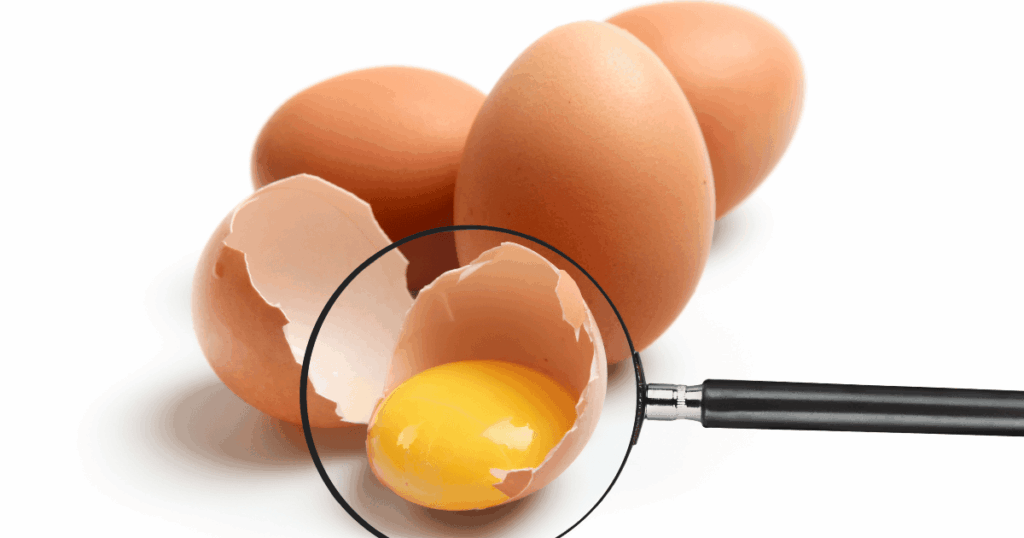
Are eggs inflammatory? It's a fair question, especially with so much conflicting advice about what to eat. The short answer is that an egg isn't inherently inflammatory or anti-inflammatory.
Its effect on your body depends almost entirely on the quality of the egg itself, which comes down to what the hen was actually fed. The real issue isn't the egg on your plate; it's the diet of the hen that laid it. When hens are raised on an industrial diet heavy in grains, the fatty acid profile of their eggs shifts, creating a high omega-6 to omega-3 ratio. This imbalance reflects a relative lack of omega-3.
But a properly raised hen produces something entirely different: a nutrient-dense food that supports your metabolic health rather than working against it. So the question isn't just "are eggs inflammatory?"—it's "what kind of egg are you eating?"
The Secret to Egg Quality: Mastering the Omega-6 to Omega-3 Ratio
Our bodies require a precise balance between omega-6 and omega-3 fatty acids. What matters is not the presence of omega-6 in itself, but the relative lack of omega-3. In a large cohort of over 85,000 people followed for about 13 years, higher omega-6 and omega-3 levels were each separately associated with lower mortality; only a high omega-6/omega-3 ratio was linked to a higher risk of death from any cause. Oxidized and refined industrial oils are a separate aggravating factor.
In conventional farming, hens are fed primarily corn, soy, or filler grains. This diet overloads the egg with omega-6, driving the omega-6/omega-3 ratio to levels that can reach 10:1 or even 20:1. Every egg from this system can, through repetition and over the long term, contribute to an unfavorable omega-6/omega-3 ratio in the consumer.
Beyond the omega-6/omega-3 ratio, it is also time to break the cholesterol myth. The idea that dietary cholesterol increases heart risk is a biological misinterpretation. The body regulates its own production based on what it receives.
A quality egg provides essential building materials for hormones and cell membranes. For most people, the issue is not the egg’s cholesterol, but an unbalanced metabolic terrain where fats can oxidize.
Why Free-Range Alone Does Not Guarantee Egg Quality
This imbalance does not only concern industrial eggs. Many hens raised by individuals or small producers live free-range but still receive unlimited grain supplements, most often wheat or corn. These grains, rich in omega-6, severely limit the benefits of free-range living and grass.
The problem goes beyond the simple lipid ratio. An excessive grain diet overloads the hen’s liver and digestive system. Yet, the hen is not a strict granivore.
It is naturally omnivorous and adapted to a diet of insects, larvae, grass, and varied seeds. Subjected to an unsuitable diet, it develops chronic inflammation and a weakened immune system. An unhealthy hen cannot produce a high-quality egg, regardless of its living environment.
The Sovereign Solution: Inform and Act
The solution lies in information, dialogue, and a change in practices to restore egg quality on our plates. The farmer is an ally. When a direct link exists, it becomes possible to exchange ideas and explain that a truly healthy egg depends first and foremost on the hen’s diet.
To achieve a truly favorable lipid ratio, below 2:1, it is essential to severely limit grains rich in omega-6 and prioritize natural sources of omega-3 such as grass, certain adapted seeds, or canola.
Buying directly from a local producer is not a luxury. It is an act of sovereignty. It is the most direct way to know what you are eating, support the local economy, and preserve our food autonomy. In a context of weakening industrial systems, farmers are a pillar of our food security.
Every decision counts. Buying a few quality eggs from an informed producer improves the health of the consumer, the hen, and the resilience of our food system.
Lipid Profile and Saturated Fat: The Nutritional Density of the Egg
Contrary to popular belief, the fat in an egg is a model of biological balance. It contains about 35% saturated fat, essential for our cell structure, but it is especially rich in monounsaturated fatty acids.
The problem, therefore, is never the presence of these saturated fats, but rather the denaturation of polyunsaturated fats (omega-6) caused by the hen’s industrial diet. A quality egg does not increase metabolic risk; it reduces it by providing stable, protective lipids.
An egg from a properly fed hen is one of the most complete foods nature has designed. Beyond this lipid-based egg quality, it provides all 9 essential amino acids in proportions perfectly suited for human assimilation. It supports tissue repair, hormone production, and overall metabolic balance.
The egg is not an ordinary food. It is a direct reflection of the environment and diet of the animal that produces it.
Conclusion
Our health and food sovereignty are inseparable. The choice is not between eating eggs or not, but between accepting a mediocre egg or demanding high egg quality.
This principle does not apply only to eggs. It concerns our entire diet. We will soon address meat, ruminant feeding, and the omega-6/omega-3 imbalance on a larger scale.
Informing yourself, supporting committed producers, and making conscious choices are essential acts today.
FAQ
Are eggs inflammatory?
Not inherently. An egg's effect on your omega-6/omega-3 balance depends on the hen's diet and the resulting ratio. Eggs from hens fed mostly corn and soy can have ratios as high as 10:1 or 20:1, which can worsen an already unfavorable omega-6/omega-3 ratio in the consumer.
Eggs from hens raised on a more natural diet, with access to grass, insects, and omega-3 sources, offer a much more balanced profile. The egg itself isn't the problem; its quality is. A quality egg does not worsen the consumer's omega-6/omega-3 imbalance.
What's the difference between conventional eggs and omega-3 or pasture-raised eggs?
Conventional eggs typically come from hens fed a grain-heavy diet, which drives up the omega-6 content and creates an unfavorable ratio. Omega-3 enriched eggs come from hens whose feed has been supplemented with omega-3 sources like flaxseed or algae. Pasture-raised eggs can be better, but it depends on what the hens actually eat.
While pasture access gives hens the opportunity to forage for grass, insects, and larvae, which naturally improves the fatty acid profile, many producers still supplement heavily with grain, which can skew the ratio back toward omega-6. The label alone doesn't tell you the full story; the hen's actual diet does.
Does the free-range label guarantee better egg quality?
No. The free-range label only indicates that hens have some outdoor access, it says nothing about what they're actually eating. A hen can be free-range and still receive unlimited grain supplements, most often wheat or corn, which are rich in omega-6.
This can severely limit the benefits of outdoor living. If you want to know whether an egg is truly high quality, you need to ask about the hen's diet, not just its living conditions.
How do I choose eggs that support a healthy omega-6 to omega-3 balance?
The most reliable way is to buy directly from a local producer and ask about the hen's diet. Look for producers who prioritize natural foraging, grass, insects, larvae, and who limit grain supplementation. Some producers also add omega-3 sources like flaxseed or canola to the feed.
This can support a more favorable omega-6 to omega-3 ratio, but it's worth confirming the details with the producer directly. When you have a direct relationship with a farmer, you can ask the questions that actually matter.
Sources and References
-
Dietary Cholesterol and the Lack of Evidence in Cardiovascular Disease
Summary : Scientific review showing the lack of a robust link between dietary cholesterol (including from eggs) and heart disease.
-
Associations of egg consumption with cardiovascular disease in a cohort study of 0.5 million Chinese adults
Summary : Large-scale analysis confirming that regular egg consumption did not increase major cardiovascular risks in this cohort.
-
ANSES — Eggs
Summary : Official reference on the nutritional density of eggs (fat-soluble vitamins, complete proteins) and their role in dietary balance.
-
Omega-3 enriched egg production: effect of α-linolenic fatty acid sources on yolk lipid composition
Summary : Study showing how the hen's diet (grass, flax, insects) modifies the omega-6/omega-3 profile transferred to the egg.
-
Choline intake from eggs and metabolic health: satiety, insulin and markers in metabolic syndrome
Summary : Research on the impact of eggs on satiety and insulin regulation, with favorable effects on certain metabolic syndrome markers.
-
Higher ratio of plasma omega-6/omega-3 fatty acids is associated with greater risk of all-cause, cancer, and cardiovascular mortality: A population-based cohort study in UK Biobank
Summary : UK Biobank cohort of 85,425 people followed for about 13 years: omega-6 and omega-3 taken separately are associated with lower mortality, while only a high omega-6/omega-3 ratio is associated with an increased risk of all-cause mortality.
-
Effect of dietary linoleic acid on markers of inflammation in healthy persons: a systematic review of randomized controlled trials
Summary : Meta-analysis of randomized trials showing that increasing linoleic acid (omega-6) intake does not raise the inflammatory markers CRP and IL-6.
-
Dietary linoleic acid intake and blood inflammatory markers: a systematic review and meta-analysis of randomized controlled trials
Summary : Meta-analysis of controlled trials confirming that higher linoleic acid intake does not raise blood inflammatory markers.
-
Nutritional Benefits from Fatty Acids in Organic and Grass-Fed Beef
Summary : Review documenting the more favorable lipid profile of grass-fed meat, with no long-term human cohort comparing grass-fed versus conventional consumers.